From Raw Signals to Reliable Results: Post-Acquisition Data Workflows in ICP Analysis
- Photo: Thermo Fisher Scientific: From Raw Signals to Reliable Results: Post-Acquisition Data Workflows in ICP Analysis
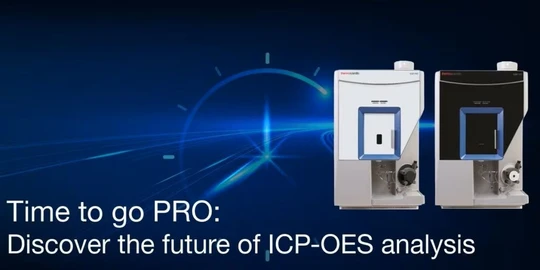
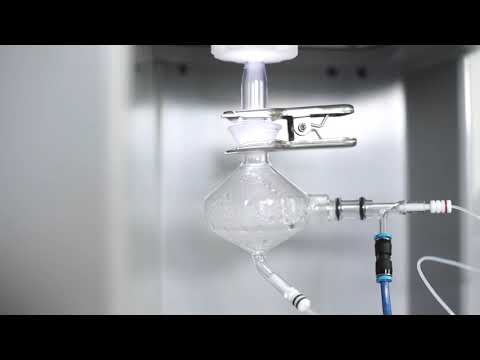
- Video: Florida Society Environmental Analysts: Thermo Scientific iCAP PRO
Introduction
 Thermo Fisher Scientific: From Raw Signals to Reliable Results: Post-Acquisition Data Workflows in ICP Analysis
Modern elemental analysis techniques such as ICP-OES and ICP-MS are capable of generating large volumes of highly sensitive, multi-dimensional data in a single analytical run. These technologies are widely used across environmental, pharmaceutical, food, and materials science applications due to their precision and low detection limits. However, while significant emphasis is often placed on method development, instrument optimisation, and sample preparation, the true scientific value of any analysis is ultimately determined during the post-acquisition phase. It is here that raw instrumental signals are processed, interrogated, and validated before being translated into meaningful and defensible results. Whether you are working with the iCAP PRO ICP-OES, the iCAP MX ICP-MS, the iCAP 7000 OES, or Qnova ICP-MS systems, the interface and workflow logic remain familiar.
Method
Following data acquisition, analysts must first navigate and organise complex datasets efficiently. Large analytical sequences may contain hundreds of samples, each with multiple analytes, replicates, and quality control elements. Tools such as column sorting and filtering are therefore essential for structured data interrogation. Sorting concentration values, for example, allows rapid identification of extreme values or potential outliers, while filtering by sample type, QC category, or analyte enables targeted investigation of specific data subsets. These tools support not only workflow efficiency but also statistical awareness, helping analysts detect trends, inconsistencies, or anomalies that may otherwise go unnoticed. In parallel, maintaining a complete LabBook history ensures that all changes to methods, calibration parameters, and analytical settings are recorded. This level of traceability is essential for regulatory compliance, particularly in environments operating under ISO standards or Good Laboratory Practice, and it ensures that results can be reproduced and audited with confidence.
A fundamental aspect of post-acquisition processing is the application and evaluation of correction models. ICP-based techniques are inherently susceptible to a range of interferences, including background signals, spectral overlaps, and matrix-induced signal suppression or enhancement. Blank subtraction is typically the first correction applied, removing contributions from reagents, solvents, and instrument background. By comparing results with and without blank correction, analysts can assess the significance of background contributions, particularly at low concentration levels. In ICP-OES, Inter-element correction (IEC) addresses spectral interferences by mathematically compensating for overlapping emission lines, which is especially important in complex matrices containing multiple elements. For ICP-MS, correction equations can be similarly implemented to correct for the presence of an isobaric interferences of mass signals.
Internal standard (IS) correction is another critical component, used to normalise signal fluctuations caused by instrument drift, variations in sample introduction, or matrix effects. Reviewing data with these corrections toggled on and off provides valuable diagnostic insight, allowing analysts to determine whether corrections are appropriate and whether the underlying method is robust.
While processed concentration data is the primary output of most analyses, deeper insight can be gained by examining the underlying signal intensities. Replicate measurements, for instance, provide a direct assessment of analytical precision. Consistent replicate signals indicate stable measurement conditions, whereas significant variation may suggest issues such as sample heterogeneity, nebuliser instability, or matrix interference. Similarly, blank intensities can reveal contamination or insufficient rinsing between samples, often serving as an early indicator of systematic error. In ICP-OES, spectral sub-array views allow analysts to visualise the emission profile around a selected wavelength, enabling verification of peak shape, background correction points, and potential spectral overlaps. In ICP-MS, attention must be given to detector behaviour, particularly when signals transition between pulse and analog modes at higher concentrations. Such transitions can introduce non-linearity into calibration curves, sometimes necessitating cross-calibration to maintain quantitative accuracy.
Calibration is central to transforming raw signal intensity into quantitative concentration data, and its evaluation is one of the most critical steps in the workflow. Several performance indicators are used to assess calibration quality. The coefficient of determination (R²) provides a measure of how well the calibration model fits the data, though a high R² alone does not guarantee accuracy. Bias offers insight into systematic deviations between expected and measured values, highlighting potential issues with standards or instrument response. Detection limits, including the limit of detection (LOD) and instrument detection limit (IDL), define the sensitivity of the method, while background equivalent concentration (BEC) reflects the contribution of background signal to the overall measurement. A comprehensive calibration assessment requires consideration of all these parameters together, rather than reliance on a single metric. In addition, quality control samples—such as calibration check standards (CCVs), certified reference materials (CRMs), and matrix spikes—are used to verify accuracy and method performance. Automated flagging of QC results that fall outside predefined acceptance criteria provides an efficient means of identifying non-compliant data and supports rapid decision-making.
Equally important is the evaluation of instrument performance through diagnostic readbacks recorded during the analysis. These parameters provide insight into the physical and operational state of the instrument at the time of measurement. For ICP-MS, key readbacks include nebuliser gas pressure, vacuum levels, and interface conditions. Changes in these parameters can indicate issues such as partial blockages, salt deposition, or vacuum degradation. Similarly, plasma-related parameters and gas flow stability are critical indicators in both ICP-OES and ICP-MS systems. By correlating readback trends with analytical results, analysts can identify the root causes of anomalies, distinguish between instrument-related and sample-related issues, and take corrective action where necessary. This diagnostic capability is particularly valuable when troubleshooting unexpected results or when sharing data with technical support teams for further investigation.
Once the data has been thoroughly reviewed and validated, the final step is to export and communicate the results in a clear and usable format. Structured reporting tools enable the generation of comprehensive summaries that include concentration data, calibration details, quality control results, and any associated flags or annotations. These reports are essential for documentation, regulatory submissions, and communication with stakeholders. For greater flexibility, exporting data in CSV format allows integration with external tools such as spreadsheet software, statistical analysis platforms, or laboratory information management systems (LIMS). This interoperability facilitates advanced data analysis, long-term data storage, and seamless integration into broader laboratory workflows.
Conclusion
In conclusion, post-acquisition data processing is not merely a procedural step but a critical component of the analytical workflow that determines the reliability and scientific validity of results. Through careful organisation of data, rigorous application of correction models, detailed evaluation of calibration performance, and continuous monitoring of instrument diagnostics, analysts can ensure that their results are both accurate and defensible. As analytical technologies continue to evolve and datasets become increasingly complex, the importance of robust and systematic data evaluation will only grow. Mastery of these workflows transforms raw instrumental signals into high-quality scientific information, underpinning confident decision-making across a wide range of applications.
Acknowledgement
I would like to thank Matthew Gregory Field Applications Scientist, North EMEA, Trace Elemental Analysis and David Fishwick Field Applications Scientist, North EMEA, Trace Elemental Analysis for the support on this blog and the webinars.
Sign up for our webinars live and on demand.
English
- Lunch and Learn Tips and Tricks Series: Qtegra Part 1
- Lunch and Learn Tips and Tricks Series: Qtegra Part 2
- Lunch and Learn Tips and Tricks Series: Trace Elemental Analysis (ICP-OES & ICP-MS)
- Trace Elemental Analysis: Ask the Expert
Deutsch
- 19. März 2026
Interne Standards in der ICP-OES: Ein Praxisguide für zuverlässige Qualitätssicherung im Labor - 18. Juni 2026
Fehler reduzieren, Durchsatz steigern: Autoverdünnung mit PrepFast am ICP-MS - 17. September 2026
ICP-OES smarter nutzen: Probendurchsatz erhöhen, Ressourcen sparen - 17. Dezember 2026
Qtegra ISDS Software Unlocked – Live im Expertengespräch
Visit us on LinkedIn: #AnalyticalChemistry #ICPMS #ICPOES #DataAnalysis