Metrological Traceability of Analytical Results

Eurachem: Metrological Traceability of Analytical Results
Traceability in the 19th century
Once a dairymaid bought one kilo of flour from the local shop. Next day she returned to sell one kilo of butter to the shopkeeper. He then complained that 50 grams of the kilo were missing.
Oh that is odd, the dairymaid said, to get the correct weight I used the kilo of flour you sold to me yesterday to weigh the butter!
Traceability today
Traceability is the ability to trace, for example, the ancestors of a person or the origin of a product. The word can be derived from the Latin tractus = drawn or the verb trahere = to draw.
Traceability can refer to documentation (e.g. a sampling procedure), a laboratory, analyst or method. But as in ISO/IEC 17025, this leaflet deals with traceability of measurement results. That is, measurement results have to be traceable to the metrological1 references used. To be specific, we use the term metrological traceability.
The current VIM2 definition of metrological traceability is: property of a measurement result whereby the result can be related to a reference through a documented unbroken chain of calibrations each contributing to the measurement uncertainty2
The references
Ideally the references should be the values of national and international standards expressed in SI units. The traceability is realised through chains of calibrations, the traceability chain. For temperature and many other physical quantities such as mass and time, the traceability is easily established.
In addition, in chemistry the working standards are substances with defined purity, solutions of pure substances and matrix reference materials.
 Douglas Hasbun: An “analyst” not knowing the traceability of his/her values for volume, time, mass, calibration solution concentration and temperature.
Temperature example - Traceability to SI
The temperature of a sample can be traced back through a chain of calibrations to the reference, an SI traceable value of temperature at 0 °C.
 Douglas Hasbun: Temperature example - Traceability to SI
Example – Mercury in tuna fish
A measurement result (mass fraction) obtained for mercury in a tuna fish sample is 4.03 ± 0.11 mg/kg. The result is reported as total Hg on dry weight basis (105 ºC, 12 h determined on a separate sample portion) and the measurement uncertainty is reported with a 95 % level of confidence (coverage factor, k=2). In this case mercury was determined with a mercury analyser (cold vapour atomic spectroscopy) after a microwave digestion.
The samples are weighed on a balance with a calibration certificate relating the weight measured to the SI unit of mass (kg).
The acid digest is diluted in a volumetric flask where the manufacturer documents the traceability of the volume of the flask to a national standard.
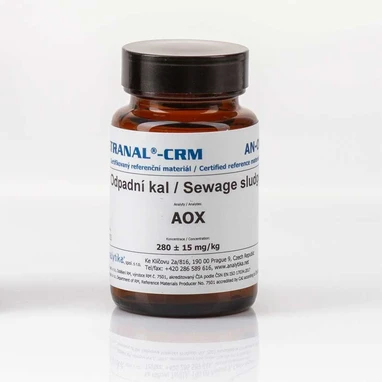
The calibration curve was prepared using a CRM (certified reference material) – a mercury standard with a certificate stating a quantity value of 0.998 ± 0.005 mg/L (k=2) and with traceability to pure mercury.
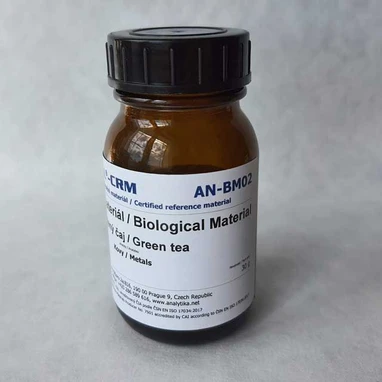
The method is validated using an appropriate matrix CRM with a total mercury mass fraction of 1.97 ± 0.04 mg/kg (k=2). The purpose of the validation is to check the method performance.
 Douglas Hasbun: An “analyst” knowing the traceability of his/her values for volume, time, mass, calibration solution concentration and temperature
How can a laboratory demonstrate metrological traceability?
The evidence required by the laboratory to demonstrate traceability for the mercury result is shown below:
- concentration of the Hg solution – a certificate for the CRM solution;
- mass of sample – calibration certificate for the balance;
- volume of volumetric flask – calibration certificate of the manufacturer;
- drying temperature – calibration of oven temperature;
- digestion conditions – calibration of e.g. temperature;
- drying time – ordinary clock or stopwatch
Point 1 would need special attention to assure the quality and traceability for the calibration standard. Traceability for points 2, 3 and 6 is easily achieved with adequate uncertainty using commercial equipment.
Points 4 and 5 need additional attention by the lab.
The use of the matrix CRM in the method validation is vital but not part of the traceability chain, since it is not used for calibration. If this CRM is used for recovery correction it should be part of the traceability chain.
Measurement quality
- Method validation demonstrates that the method (set of conditions) used in a particular laboratory at a certain time was fit for purpose and all significant effects were identified.
- Calibration of critical equipment completes the metrological traceability chains.
- Measurement uncertainty is estimated from the method validation and the traceability.
- Quality control (internal and external) assures that the measurement results (including uncertainty) are of the same quality as at the time of validation.
Conclusion
The traceability of a measurement result refers to metrological traceability as defined by VIM. It relates the result to SI units or other agreed standards/references.
Traceability is essential for comparability of results and is a requirement of ISO/IEC 17025. Traceability is easily achieved following good laboratory practice.
- 1Metrology is the science of measurement
- 2International Vocabulary of Metrology – Basic and General Concepts and Associated Terms (VIM 3rd edition) JCGM 200:2012, www.bipm.org
- Eurachem/CITAC guide on Traceability www.eurachem.com
- Meeting the Traceability Requirements of ISO17025, 3rd Ed, V. Barwick, S. Wood (Eds), 2005, LGC www.lgcgroup.com/nml