Author
Organomation
Organomation
Organomation, founded in 1959, designs and manufactures high-quality nitrogen evaporators and extraction systems. Known for innovation and durability, their lab instruments are used globally for efficient sample preparation with strong customer support.
Tags
Interview
Video
Science and research
Scientists
LinkedIn Logo

How LA-ICP-MS Imaging Reveals Disease in Tissue

Fr, 1.5.2026
| Original article from: Concentrating on Chromatography / David Oliva
Why sample preparation, metrology, and LA-ICP-MS are critical for reliable analytical data. Learn how to ensure traceability, avoid common pitfalls, and improve data quality.
Video placeholder
  • Photo: Concentrating on Chromatography: How LA-ICP-MS Imaging Reveals Disease in Tissue
  • Video: Concentrating on Chromatography: How LA-ICP-MS Imaging Reveals Disease in Tissue | Metrology, Multiplexing & Analytical Chemistry

🎤Monique Mello

In this episode of Concentrating on Chromatography, David sits down with Monique Mello, analytical chemist, educator, and LA-ICP-MS imaging specialist, to explore how laser ablation ICP-MS (LA-ICP-MS) and immuno-mass spectrometry imaging (iMSI) are transforming pathology, environmental science, and translational research.

Monique shares her journey from public-health and pathology labs in Brazil to environmental and biomedical research in Australia — and explains why metrology, traceability, and defensible measurements are the foundation of meaningful science.

We dive into her work developing multiplexed elemental imaging methods that allow researchers to quantify multiple proteins at once in tissue — revealing interactions that traditional single-marker methods miss. Her studies show how LA-ICP-MS can map dystrophin-glycoprotein complex proteins in muscular dystrophy and track elemental distributions like zinc in Alzheimer’s disease tissue.

We also discuss something many labs overlook: sample preparation and immunolabelling can change the chemistry you’re trying to measure. Monique’s research demonstrates how staining steps can redistribute endogenous metals and why rigorous validation is critical for trustworthy data.

If you care about chromatography, mass spectrometry, or analytical chemistry that genuinely impacts patients and communities, this episode is for you.

In this conversation, we cover:
  • What LA-ICP-MS imaging is and how it works
  • Multiplexed antibody tagging with lanthanides for quantitative tissue imaging
  • Why metrology and uncertainty matter more than “pretty data”
  • Common analytical failures (and why sample prep causes most of them)
  • Elemental mapping in muscular dystrophy and Alzheimer’s research
  • How immunolabelling and coverslipping can perturb endogenous metals
  • Teaching analytical chemistry for real-world problem solving

Video Transcription

Analytical chemistry sits at the intersection of science, decision-making, and trust. Whether applied in environmental monitoring, clinical research, or biological imaging, the reliability of analytical results determines how confidently we can interpret data and act on it.

In a recent expert discussion, key themes emerged that resonate strongly across the analytical community—from the fundamentals of metrology to advanced techniques such as laser ablation ICP-MS (LA-ICP-MS). This article highlights the most important insights for scientists working with complex matrices, trace analysis, and high-impact data.

Analytical Chemistry: Evidence Over Opinion

At its core, analytical chemistry is about transforming observations into defensible, quantitative evidence. The use of calibrated methods—such as properly constructed calibration curves—ensures that measured values reflect reality as closely as possible.

Reliable data is not just a technical outcome; it is a responsibility. Every result must be:

  • Traceable
  • Accurate
  • Interpretable
  • Fit for decision-making

When methods are robust, the sample itself “tells the truth.” The challenge lies in ensuring that nothing in the workflow distorts that message.

Metrology: The Invisible Backbone of Data Quality

Despite its importance, metrology is often overlooked outside specialized laboratories. This is largely because it operates silently—until something goes wrong.

Several factors contribute to its underappreciation:

  • Focus on novelty over measurement quality
    Scientific recognition often prioritizes new findings rather than data reliability.
  • Black-box instrumentation
    Modern instruments appear “plug-and-play,” leading to overconfidence in automatically generated results.
  • Confusion between precision and accuracy
    Repeatability does not guarantee correctness.
  • Complexity of uncertainty
    Concepts like uncertainty budgets and traceability are perceived as abstract or overly statistical.
  • Time and cost pressures
    Proper validation, use of certified reference materials (CRMs), and quality control require additional resources.

Improving metrology awareness requires translating these concepts into practical laboratory workflows and emphasizing their direct impact on scientific conclusions.

Where Analytical Methods Most Commonly Fail

Failures in analytical workflows typically originate upstream—well before data processing or interpretation.

1. Sample Preparation (Primary Source of Error)

The majority of analytical errors arise during sample preparation, including:

  • Contamination (reagents, labware, environment)
  • Poor recovery (adsorption, volatilization, filtration losses)
  • Matrix effects
  • Non-representative sampling
  • Lack of proper controls

Errors introduced here propagate through the entire analytical chain.

2. Data Interpretation

Common issues include:

  • Misuse or misunderstanding of calibration models
  • Ignoring instrumental drift
  • Overreliance on linearity without validation
3. Instrumentation

Although often blamed, instruments are less frequently the root cause. Still, issues such as:

  • Detector saturation
  • Carryover
  • Misalignment
  • Signal drift
    can significantly impact results.
Best Practices for Reliable and Defensible Data

For early-career scientists and experienced analysts alike, several habits are essential:

  • Document everything (lab notebooks, timestamps, workflows)
  • Standardize sample preparation procedures
  • Use quality controls (blanks, spikes, duplicates, CRMs)
  • Validate before analyzing samples
  • Avoid reusing calibration curves
  • Preserve raw data securely
  • Evaluate uncertainty and detection limits

Strong documentation and consistent QC transform data from “results” into defensible evidence.

LA-ICP-MS: A Powerful Tool for Biological Imaging

Laser ablation inductively coupled plasma mass spectrometry (LA-ICP-MS) represents a significant advancement in analytical capabilities—particularly for spatially resolved analysis.

Key Advantages
  • Direct analysis of solid samples (no digestion required)
  • Preservation of spatial information
  • Simultaneous multi-element detection
  • Quantitative imaging of biological tissues

In biological applications, LA-ICP-MS enables researchers to:

  • Map the distribution of biomolecules or metals in tissues
  • Study interactions in situ
  • Combine spatial and quantitative information

For example, multiplex imaging allows simultaneous observation of multiple targets, providing a more realistic representation of biological systems compared to single-marker approaches.

Multiplex Imaging vs. Single-Marker Analysis

Traditional methods often focus on one analyte at a time. However, biological systems are inherently complex and interactive.

Multiplex approaches enable:

  • Co-localization analysis
  • Detection of interactions between biomolecules
  • Identification of spatial heterogeneity

This is particularly critical in disease research, where:

  • Single-marker data may lead to misleading conclusions
  • Multi-target analysis reveals underlying biological mechanisms

Applications in Disease Research: The Case of Metal Distribution

In neurodegenerative diseases such as Alzheimer’s, total elemental concentration alone is insufficient.

For example:

  • Zinc may be present at similar total levels in healthy and diseased tissue
  • However, its spatial distribution changes significantly, forming localized clusters

Elemental mapping therefore provides:

  • Insight into disease progression
  • Potential diagnostic markers
  • Support for targeted therapeutic strategies

Lessons from Environmental Analysis

Environmental chemistry offers valuable principles applicable across analytical disciplines:

  • Treat complex matrices with caution
  • Control contamination rigorously
  • Ensure representative sampling
  • Validate methods with appropriate standards

One key takeaway: A linear calibration curve does not guarantee accuracy—traceability does.

Sample Preparation: The Most Underrated Investment

Laboratories often prioritize instrumentation over sample preparation, but this is a critical imbalance.

Key recommendations:

  • Treat sample preparation as part of the analytical system
  • Invest in method development and training
  • Routinely verify performance (blanks, drift, recovery)
  • Maintain strict adherence to SOPs

Poor sample preparation cannot be corrected downstream—even with the most advanced instrumentation.

Scientific Continuity and Data Integrity

A less-discussed challenge in analytical science is the loss of continuity:

  • Staff turnover
  • Incomplete documentation
  • Fragmented datasets

This leads to:

  • Repetition of work
  • Loss of knowledge
  • Reduced reproducibility

Robust documentation and standardized workflows are essential to ensure that research progress is cumulative rather than cyclical.

Mindset for the Next Generation of Analytical Scientists

To produce impactful and trustworthy work, scientists should adopt the following principles:

  • Resilience – experiments fail; learning continues
  • Critical thinking – understand every step, not just follow protocols
  • Curiosity – always ask “why”
  • Impact awareness – consider who benefits from your data
  • Respect for fundamentals – QC, documentation, and preparation matter most

Analytical chemistry is not just about generating numbers—it is about generating truth.

Conclusion

From metrology and sample preparation to advanced imaging techniques like LA-ICP-MS, the strength of analytical science lies in its ability to produce reliable, interpretable, and actionable data.

As analytical challenges grow more complex—especially in fields such as biomedicine and environmental science—the need for robust methodologies and critical thinking becomes even more essential.

Ultimately, the value of analytical chemistry is measured not only by precision, but by the confidence we place in the decisions it enables.

This text has been automatically transcribed from a video presentation using AI technology. It may contain inaccuracies and is not guaranteed to be 100% correct.

Concentrating on Chromatography Podcast

Dive into the frontiers of chromatography, mass spectrometry, and sample preparation with host David Oliva. Each episode features candid conversations with leading researchers, industry innovators, and passionate scientists who are shaping the future of analytical chemistry. From decoding PFAS detection challenges to exploring the latest in AI-assisted liquid chromatography, this show uncovers practical workflows, sustainability breakthroughs, and the real-world impact of separation science. Whether you’re a chromatographer, lab professional, or researcher you'll discover inspiring content!

You can find Concentrating on Chromatography Podcast in podcast apps:

and on YouTube channel

Organomation
LinkedIn Logo
 

Related content

Waters Aura Systems

Brochures and specifications
| 2026 | Waters
Instrumentation
Particle size analysis, Particle characterization, Microscopy
Manufacturer
Waters
Industries
Materials Testing

The Agilent 9500 ICP-MS

Brochures and specifications
| 2026 | Agilent Technologies
Instrumentation
ICP/MS, ICP/MS/MS
Manufacturer
Agilent Technologies
Industries
Other

Agilent 9500 ICP‑QQQ with m‑Lens for Ultratrace Analysis of High‑Purity Reagents

Applications
| 2026 | Agilent Technologies
Instrumentation
ICP/MS, ICP/MS/MS
Manufacturer
Agilent Technologies
Industries
Semiconductor Analysis

Analysis of copper alloys with the ARL X900 XRF Spectrometer

Applications
| 2026 | Thermo Fisher Scientific
Instrumentation
X-ray
Manufacturer
Thermo Fisher Scientific
Industries
Materials Testing

Measurement of Fixed Carbon, Volatile Matter, and Ash of Biocoke

Applications
| 2026 | Shimadzu
Instrumentation
Thermal Analysis
Manufacturer
Shimadzu
Industries
Energy & Chemicals
 

Related articles

ESAS 2022 & 17th CSSC
Article | Events

ESAS 2022 & 17th CSSC

European Symposium on Analytical Spectrometry (ESAS) and the 17th Czech-Slovak Spectroscopic Conference (CSSC) will be held from September 4 to September 9, 2022 in Brno, Czech Republic.
ESAS
tag
share
more
ESAS-CSSC 2022 (Day 4)
Article | Events

ESAS-CSSC 2022 (Day 4)

On Thursday, September 8, a very intensive program was prepared for the participants of the ESAS-CSSC 2022 conference. Awarding of the IMM Medal, 28 lectures and the long social evening.
ESAS
tag
share
more
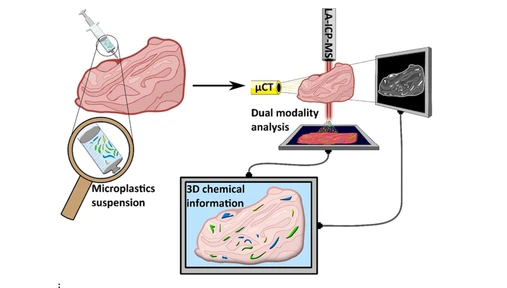
Integrated laser ablation and computed tomography: detecting the chemical footprint of microplastics and reconstructing 3D biological tissues
Scientific article | Science and research

Integrated laser ablation and computed tomography: detecting the chemical footprint of microplastics and reconstructing 3D biological tissues

This study integrates μCT and LA-ICP-MS to detect and reconstruct microplastics in tissues, combining structural imaging with chemical mapping.
LabRulez
tag
share
more
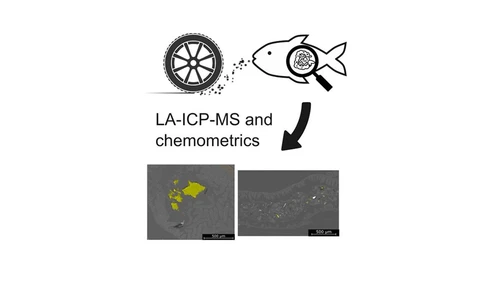
A Method for the Detection of Tire Wear Microplastics in Zebrafish Guts by Laterally Resolved LA-ICP-MS-Based Elemental Fingerprinting and Chemometrics
Scientific article | Science and research

A Method for the Detection of Tire Wear Microplastics in Zebrafish Guts by Laterally Resolved LA-ICP-MS-Based Elemental Fingerprinting and Chemometrics

This study combines LA-ICP-MS elemental imaging and chemometrics to identify tire wear microplastics in biological tissues.
LabRulez
tag
share
more
 

Related content

Waters Aura Systems

Brochures and specifications
| 2026 | Waters
Instrumentation
Particle size analysis, Particle characterization, Microscopy
Manufacturer
Waters
Industries
Materials Testing

The Agilent 9500 ICP-MS

Brochures and specifications
| 2026 | Agilent Technologies
Instrumentation
ICP/MS, ICP/MS/MS
Manufacturer
Agilent Technologies
Industries
Other

Agilent 9500 ICP‑QQQ with m‑Lens for Ultratrace Analysis of High‑Purity Reagents

Applications
| 2026 | Agilent Technologies
Instrumentation
ICP/MS, ICP/MS/MS
Manufacturer
Agilent Technologies
Industries
Semiconductor Analysis

Analysis of copper alloys with the ARL X900 XRF Spectrometer

Applications
| 2026 | Thermo Fisher Scientific
Instrumentation
X-ray
Manufacturer
Thermo Fisher Scientific
Industries
Materials Testing

Measurement of Fixed Carbon, Volatile Matter, and Ash of Biocoke

Applications
| 2026 | Shimadzu
Instrumentation
Thermal Analysis
Manufacturer
Shimadzu
Industries
Energy & Chemicals
 

Related articles

ESAS 2022 & 17th CSSC
Article | Events

ESAS 2022 & 17th CSSC

European Symposium on Analytical Spectrometry (ESAS) and the 17th Czech-Slovak Spectroscopic Conference (CSSC) will be held from September 4 to September 9, 2022 in Brno, Czech Republic.
ESAS
tag
share
more
ESAS-CSSC 2022 (Day 4)
Article | Events

ESAS-CSSC 2022 (Day 4)

On Thursday, September 8, a very intensive program was prepared for the participants of the ESAS-CSSC 2022 conference. Awarding of the IMM Medal, 28 lectures and the long social evening.
ESAS
tag
share
more
Integrated laser ablation and computed tomography: detecting the chemical footprint of microplastics and reconstructing 3D biological tissues
Scientific article | Science and research

Integrated laser ablation and computed tomography: detecting the chemical footprint of microplastics and reconstructing 3D biological tissues

This study integrates μCT and LA-ICP-MS to detect and reconstruct microplastics in tissues, combining structural imaging with chemical mapping.
LabRulez
tag
share
more
A Method for the Detection of Tire Wear Microplastics in Zebrafish Guts by Laterally Resolved LA-ICP-MS-Based Elemental Fingerprinting and Chemometrics
Scientific article | Science and research

A Method for the Detection of Tire Wear Microplastics in Zebrafish Guts by Laterally Resolved LA-ICP-MS-Based Elemental Fingerprinting and Chemometrics

This study combines LA-ICP-MS elemental imaging and chemometrics to identify tire wear microplastics in biological tissues.
LabRulez
tag
share
more
 

Related content

Waters Aura Systems

Brochures and specifications
| 2026 | Waters
Instrumentation
Particle size analysis, Particle characterization, Microscopy
Manufacturer
Waters
Industries
Materials Testing

The Agilent 9500 ICP-MS

Brochures and specifications
| 2026 | Agilent Technologies
Instrumentation
ICP/MS, ICP/MS/MS
Manufacturer
Agilent Technologies
Industries
Other

Agilent 9500 ICP‑QQQ with m‑Lens for Ultratrace Analysis of High‑Purity Reagents

Applications
| 2026 | Agilent Technologies
Instrumentation
ICP/MS, ICP/MS/MS
Manufacturer
Agilent Technologies
Industries
Semiconductor Analysis

Analysis of copper alloys with the ARL X900 XRF Spectrometer

Applications
| 2026 | Thermo Fisher Scientific
Instrumentation
X-ray
Manufacturer
Thermo Fisher Scientific
Industries
Materials Testing

Measurement of Fixed Carbon, Volatile Matter, and Ash of Biocoke

Applications
| 2026 | Shimadzu
Instrumentation
Thermal Analysis
Manufacturer
Shimadzu
Industries
Energy & Chemicals
 

Related articles

ESAS 2022 & 17th CSSC
Article | Events

ESAS 2022 & 17th CSSC

European Symposium on Analytical Spectrometry (ESAS) and the 17th Czech-Slovak Spectroscopic Conference (CSSC) will be held from September 4 to September 9, 2022 in Brno, Czech Republic.
ESAS
tag
share
more
ESAS-CSSC 2022 (Day 4)
Article | Events

ESAS-CSSC 2022 (Day 4)

On Thursday, September 8, a very intensive program was prepared for the participants of the ESAS-CSSC 2022 conference. Awarding of the IMM Medal, 28 lectures and the long social evening.
ESAS
tag
share
more
Integrated laser ablation and computed tomography: detecting the chemical footprint of microplastics and reconstructing 3D biological tissues
Scientific article | Science and research

Integrated laser ablation and computed tomography: detecting the chemical footprint of microplastics and reconstructing 3D biological tissues

This study integrates μCT and LA-ICP-MS to detect and reconstruct microplastics in tissues, combining structural imaging with chemical mapping.
LabRulez
tag
share
more
A Method for the Detection of Tire Wear Microplastics in Zebrafish Guts by Laterally Resolved LA-ICP-MS-Based Elemental Fingerprinting and Chemometrics
Scientific article | Science and research

A Method for the Detection of Tire Wear Microplastics in Zebrafish Guts by Laterally Resolved LA-ICP-MS-Based Elemental Fingerprinting and Chemometrics

This study combines LA-ICP-MS elemental imaging and chemometrics to identify tire wear microplastics in biological tissues.
LabRulez
tag
share
more
 

Related content

Waters Aura Systems

Brochures and specifications
| 2026 | Waters
Instrumentation
Particle size analysis, Particle characterization, Microscopy
Manufacturer
Waters
Industries
Materials Testing

The Agilent 9500 ICP-MS

Brochures and specifications
| 2026 | Agilent Technologies
Instrumentation
ICP/MS, ICP/MS/MS
Manufacturer
Agilent Technologies
Industries
Other

Agilent 9500 ICP‑QQQ with m‑Lens for Ultratrace Analysis of High‑Purity Reagents

Applications
| 2026 | Agilent Technologies
Instrumentation
ICP/MS, ICP/MS/MS
Manufacturer
Agilent Technologies
Industries
Semiconductor Analysis

Analysis of copper alloys with the ARL X900 XRF Spectrometer

Applications
| 2026 | Thermo Fisher Scientific
Instrumentation
X-ray
Manufacturer
Thermo Fisher Scientific
Industries
Materials Testing

Measurement of Fixed Carbon, Volatile Matter, and Ash of Biocoke

Applications
| 2026 | Shimadzu
Instrumentation
Thermal Analysis
Manufacturer
Shimadzu
Industries
Energy & Chemicals
 

Related articles

ESAS 2022 & 17th CSSC
Article | Events

ESAS 2022 & 17th CSSC

European Symposium on Analytical Spectrometry (ESAS) and the 17th Czech-Slovak Spectroscopic Conference (CSSC) will be held from September 4 to September 9, 2022 in Brno, Czech Republic.
ESAS
tag
share
more
ESAS-CSSC 2022 (Day 4)
Article | Events

ESAS-CSSC 2022 (Day 4)

On Thursday, September 8, a very intensive program was prepared for the participants of the ESAS-CSSC 2022 conference. Awarding of the IMM Medal, 28 lectures and the long social evening.
ESAS
tag
share
more
Integrated laser ablation and computed tomography: detecting the chemical footprint of microplastics and reconstructing 3D biological tissues
Scientific article | Science and research

Integrated laser ablation and computed tomography: detecting the chemical footprint of microplastics and reconstructing 3D biological tissues

This study integrates μCT and LA-ICP-MS to detect and reconstruct microplastics in tissues, combining structural imaging with chemical mapping.
LabRulez
tag
share
more
A Method for the Detection of Tire Wear Microplastics in Zebrafish Guts by Laterally Resolved LA-ICP-MS-Based Elemental Fingerprinting and Chemometrics
Scientific article | Science and research

A Method for the Detection of Tire Wear Microplastics in Zebrafish Guts by Laterally Resolved LA-ICP-MS-Based Elemental Fingerprinting and Chemometrics

This study combines LA-ICP-MS elemental imaging and chemometrics to identify tire wear microplastics in biological tissues.
LabRulez
tag
share
more
Other projects
GCMS
LCMS
Follow us
FacebookLinkedInYouTube
More information
WebinarsAbout usContact usTerms of use
LabRulez s.r.o. All rights reserved. Content available under a CC BY-SA 4.0 Attribution-ShareAlike