Eurachem/CITAC Workshop on Quality in Analytical Measurements 2026

Eurachem/CITAC Workshop on Quality in Analytical Measurements 2026
Eurachem and CITAC welcome analysts interested in the evaluation of chemical analysis uncertainty and in how to use this information in results interpretation. The Eurachem Week 2026 will begin with a training course on “Evaluation of the measurement uncertainty from in-house precision and recovery data” scheduled for Sunday, 10 May 2026. A two-days workshop on “Quality in Analytical Measurements: Uncertainty Evaluation and Results Interpretation” open to all interested participants will take place from 11 to 12 May 2026. On 13 May 2026, the Eurachem Working Groups will convene, followed by the Eurachem General Assembly, which will bring together the Executive and national delegates on 14 and 15 May. Both Working Group Meetings and the General Assembly are restricted to their members.
The results of qualitative and quantitative chemical analyses should have an acceptable uncertainty, which should ideally be reported and considered in results interpretation.
For many analytical applications, simplified uncertainty evaluations can determine uncertainty values that meet the defined requirements for this parameter. The workshop will focus on the key technical challenges involved in practical evaluations of measurement uncertainty based on precision and recovery data gathered during in-house method validation and quality control. There will be a discussion of how to model the variation of the measurement uncertainty within the analytical range and how to handle divergent recovery values from the analysis of various reference materials. A session on the use of measurement uncertainty in conformity assessment will explore how the risk of false conformity decisions can be managed.
New Eurachem guidance on using in-house precision and recovery data will be discussed at the workshop.
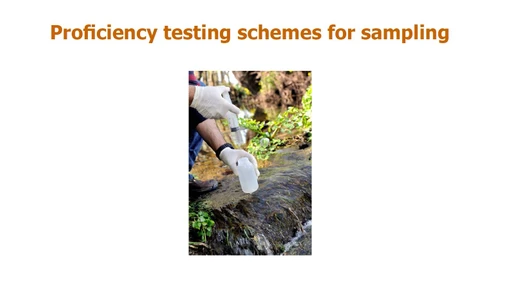
Topics will also include the validation and uncertainty evaluation for qualitative analyses with particular attention to current accreditation requirements for these types of analysis. The last session of the workshop will be dedicated to the evaluation of measurement uncertainty arising from sampling and using it to judge the fitness for purpose, and hence validation, of measurement procedures that include sampling. Four sessions of the workshop will include engaging breakout sessions where participants will have the chance to share their views about challenging aspects of the analytical work. Participants are invited to propose posters and oral communications on session topics or any other relevant topic for analytical chemists or stakeholders of the analytical work.
Registration
Registration Fees
Early bird (EUR) - Until April 15th
- Workshop: Regular participant (11 & 12 May 2026): 400 EUR
- Workshop: Student (11 & 12 May 2026): 250 EUR
- Eurachem Working Group1 (13 May 2026): 75
- General Assembly2 (14 & 15 May 2026): 250
- Training On Uncertainty Evaluation3 (10 May 2026): 150
After April 15th
- Workshop: Regular participant (11 & 12 May 2026): 450 EUR
- Workshop: Student (11 & 12 May 2026): 300 EUR
- Eurachem Working Group1 (13 May 2026): 100
- General Assembly2 (14 & 15 May 2026): 300
- Training On Uncertainty Evaluation3 (10 May 2026): 200
§ - 50 EUR reduction for members of Eurachem, CITAC, SPQ, RELACRE, ForMEQ and SPMet at the workshop.
10% reduction for organisations that registered more than one participant.
1 - Working group members
2 - Eurachem members
3 - 50% reduction for workshop participants
Workshop
Eurachem/CITAC Workshop on Quality in Analytical Measurements:
Uncertainty Evaluation and Results Interpretation
The results of qualitative and quantitative chemical analyses should have an acceptable uncertainty, which should ideally be reported and considered in results interpretation. For many analytical applications, simplified uncertainty evaluations can determine uncertainty values meeting defined requirements for this parameter. The workshop will focus on the key technical challenges involved in practical evaluations of measurement uncertainty based on precision and recovery data gathered during in-house method validation. It will be discussed how to model the variation of the measurement uncertainty within the analytical range and how to handle divergent recovery values from the analysis of various reference materials. A session on the use of measurement uncertainty in conformity assessment will explore how the risk of false conformity decisions can be managed.
Topics will also include the validation and uncertainty evaluation of qualitative analyses with particular attention to current accreditation requirements for these types of analysis. The last session of the workshop will be dedicated to the evaluation of measurement uncertainty arising from sampling and using it to judge the fitness for purpose, and hence validation, of measurement procedures that include sampling.
Four sessions of the workshop will include engaging breakout sessions where participants will have the chance to share their views about challenging aspects of the analytical work. Participants are invited to propose posters and oral communications on session topics or any other relevant topic for analytical chemists or stakeholders of the analytical work.
Training Course
Evaluation of the measurement uncertainty from in-house precision and recovery data
- 10 May 2026
A course on the fundamentals of the evaluation of the measurement uncertainty from in-house precision and recovery data will be held on Sunday, 10 May 2026. This training is targeted for analysts with a basic understanding of the measurement uncertainty concept, how uncertainty components propagate, and how the combined uncertainty is expanded. Following the morning presentation of the theory of uncertainty evaluation, the afternoon will be dedicated to applying the theory to real-world cases. Trainees should have basic skills in using Microsoft Excel spreadsheets and bring a laptop with Microsoft Excel to complete the exercises. The interaction between trainers and trainees will be promoted to guarantee learning efficiency.
Trainers:
- Ricardo Bettencourt da Silva, Faculdade de Ciências da Universidade de Lisboa, Portugal ([email protected])
- Stephen L. R. Ellison - UK National Measurement Laboratory (NML) hosted at LGC, United Kingdom
- Vicki Barwick - UK National Measurement Laboratory (NML) hosted at LGC, United Kingdom
Agenda
8:00 Registration
9:00 Opening
9:05 Identifying, combining, and expanding uncertainty components: Theory and examples
9:45 Precision uncertainty: Theory and examples
10:30 Coffee break
10:50 Trueness-related uncertainty: Theory and examples
12:00 Additional questions and discussion
12:30 Lunch
13:30 Application example 1
15:30 Coffee break
15:50 Application example 2
17:00 Additional questions and discussion
17:30 Closing
Venue
The series of Eurachem events will be held in:
- Meliã Lisboa Aeroporto ****
- Rua C,2 1749-125 Lisboa, Portugal