

Improving Resolution of Single Nanoparticles with Agilent 9500 ICP-MS
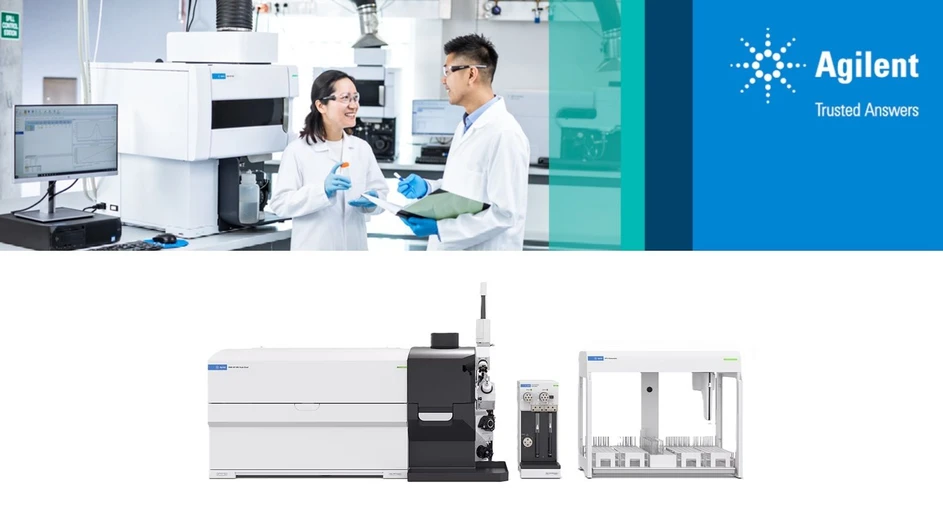
Accurate determination of trace metallic impurities in high purity titanium is essential for advanced materials applications, including semiconductor and aerospace manufacturing, where impurity levels directly influence performance and reliability. In this study, triple quadrupole Inductively Coupled Plasma Mass Spectrometry (ICP-QQQ) system equipped with a collision/reaction cell (CRC) was evaluated for the analysis of impurity elements in a high titanium matrix.
Presenter: Bastian Georg (Atomic Spectroscopy Application Scientist, Agilent Technologies, Inc.)
He has been an Atomic Spectroscopy (ICP-MS) Application Scientist with Agilent since June 2018. Bastian holds a MSc degree in Geology from the University of Munster, Germany, and a Dr. of Science degree in Geochemistry from ETH Zurich in Switzerland. After completing a 3-yr Postdoctoral Research term at the Earth Science Department at Oxford University, Bastian joined the Trent University Water Quality Centre, Peterborough, Canada, in 2010 as senior ICP-MS research scientist. Bastian’s research record of numerous peer-reviewed publications has been cited over 3000 times, and comprises research in environmental geochemistry, cosmochemistry, isotope geochemistry and trace-metal analyses


