ICPMS
More information
WebinarsAbout usContact usTerms of use
LabRulez s.r.o. All rights reserved. Content available under a CC BY-SA 4.0 Attribution-ShareAlike
Author
Czech Academy of Sciences
The Czech Academy of Sciences (CAS) was established by Act No. 283/1992 Coll. as the Czech successor of the former Czechoslovak Academy of Sciences. It is set up as a complex of 54 public research institutions.
Tags
Article
Science and research
LinkedIn Logo

Customized microreactors: 3D printing has facilitated the development of polymer brushes for biosensors
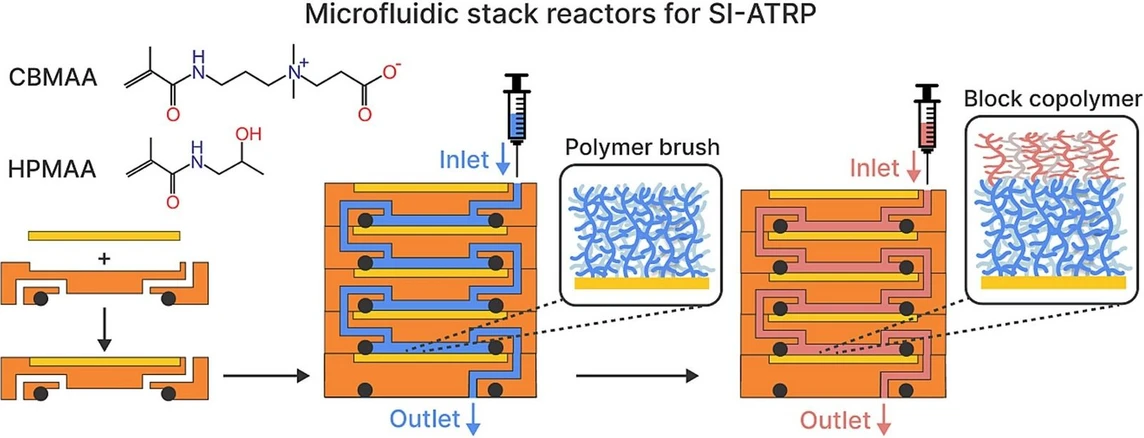
Researchers from the Czech Academy of Sciences developed a 3D-printed microfluidic reactor enabling faster, greener, and higher-quality synthesis of polymer brushes — the foundation of modern biosensors.
<p>Institute of Physics of the Czech Academy of Sciences: Customized microreactors: 3D printing has facilitated the development of polymer brushes for biosensors</p>

Institute of Physics of the Czech Academy of Sciences: Customized microreactors: 3D printing has facilitated the development of polymer brushes for biosensors

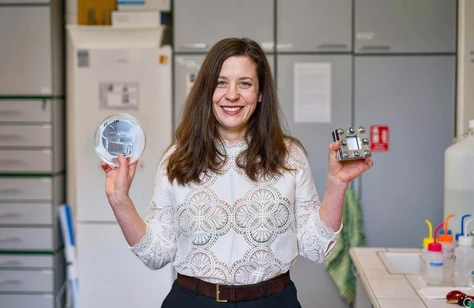
How can the preparation of polymer brushes, the basis of modern biosensors, be made faster and simpler? A team led by Hana Lísalová from the Division of Optics of the Institute of Physics of the Czech Academy of Sciences has found a solution: it designed and, using 3D printing, manufactured a microfluidic reactor. The new method of preparing thin polymer films allows for better control of their properties while saving time and chemicals. The research results were published in the prestigious Chemical Engineering Journal.

3D printing and microfluidics are changing the rules of the game

Polymer brushes, ultra-thin nanofilms of polymers bound to the surface of materials, play a key role in biosensors, diagnostic chips, and other bioanalytical technologies. However, the existing methods of producing them in conventional reactors are not very efficient. Hana Lísalová's team therefore used 3D printing to create a microfluidic stacked reactor, which makes it possible to polymerize dozens of substrates at once with minimal chemical consumption.

Brushes that grow faster and in better quality

Detailed characterization using infrared spectroscopy (IRRAS), spectroscopic ellipsometry, X-ray photoelectron spectroscopy (XPS), and surface plasmon resonance (SPR) showed that brushes prepared in a microfluidic reactor have comparable, and in some respects even better, properties than brushes created using conventional methods. In the microfluidic reactor, brushes grow faster, achieve higher density, and their desired properties can be more easily tuned. In addition, the new approach paves the way for the preparation of more complex multilayer structures and the production of surfaces with different functions on a single chip.

At the beginning of the research, several people told us that it wouldn't be possible to produce polymer brushes this way," says N. Scott Lynn, who led the project. "That pushed us to be even more thorough, and we were thrilled to find that not only were the microreactors much easier to use, but they also produced films of such high quality. 3D printing then helped us adapt the device to meet the demanding requirements that this type of chemistry involves."

Special recognition goes to Scott Lynn, who designed and printed the microfluidic folded reactor, and Markéta Vrabcová, who led the preparation and testing of the polymer films. Markéta is one of the pillars of our team in the field of synthetic methods – in this project, she made excellent use of her many years of experience gained at the Institute of Physics. Her collaboration with Scott proved to be an extremely effective partnership," adds Hana Lísalová, head of the Laboratory of Functional Biointerfaces.

Future prospect: 3D printing in materials engineering

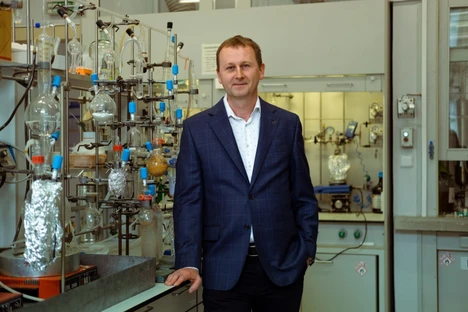
The significance of this research extends beyond the field of biosensors and reveals new possibilities for the use of 3D printing in chemical process control. "At the Institute of Physics, we have long-term expertise in 3D printing for scientific and technological applications. This research beautifully illustrates how we can use additive technologies to design smart reactors and devices for materials engineering, biophotonics, and medicine," adds Alexandr Dejneka, head of the Division of Optics at the Institute of Physics.

The  Laboratory of Functional Biointerfaces’ team is now preparing polymer films with more complex patterns. These techniques allow different polymer compositions to be applied to a single surface, helping scientists investigate how molecular structure affects material properties. In addition, the team has succeeded in mastering polymerization in microliter volumes – a very challenging task in chemistry, even using conventional methods. Now, researchers are taking on another challenge: synthesizing polymer films on an even smaller scale – in nanoliters and even femtoliters, which are a billion times smaller than a microliter. In this area, the team is working closely with the Dioscuri Centre for Single-Molecule Optics, led by Barbora Špačková.

The original article

Microfluidic stack reactors for the mass synthesis of polymer brushes

Markéta Vrabcová, Monika Spasovová, Volkan Cirik, Judita Anthi, Alina Pilipenco, Milan Houska, Oleksandr Romanyuk, Hana Vaisocherová-Lísalová, N. Scott Lynn Jr

Chemical Engineering Journal, Volume 508, 15 March 2025, 160914

https://doi.org/10.1016/j.cej.2025.160914

licensed under CC-BY 4.0

Abstract

Polymer brush (PB) coatings represent a powerful method of tuning surface physicochemical properties in a broad number of fields including biosensing, which require PB synthesis onto 10–100 or more substrates per day. Typically, PBs are synthesized by surface-initiated atom transfer radical polymerization (SI-ATRP) in Schlenk reactors that need large volumes of solutions, imposing substantial economic challenges for mass synthesis, as typically only 0.1% or less of monomers are polymerized. Microfluidic synthesis offers a promising alternative for reducing chemical consumption; however, questions remain on how to perform such synthesis on a mass scale and furthermore, if PBs are of similar quality like those prepared via standard means.

Here we present a microfluidic stack reactor designed for an efficient and user-friendly mass synthesis of PBs onto planar substrates. This reactor, 3D printed via stereolithography, consists of repeating units that are easy to fabricate and when stacked together, create a single fluidic pathway connecting an adjustable number of substrates, enhancing polymerization efficiency by over 100-fold. We employed the stack reactors to synthesize various PB structures (homogenous, random copolymer, block copolymer) combining two monomers commonly used in biosensing known for their antifouling properties: zwitterionic poly(carboxybetaine methacrylamide) (pCBMAA) and non-ionic poly[N-(2-hydroxypropyl) methacrylamide] (pHPMAA). Characterization by IRRAS, ellipsometry, XPS, contact angle, and SPR, confirmed that PBs synthesized in stack reactors are comparable, if not superior, to those synthesized via standard SI-ATRP methods. These reactors are thus a promising tool for efficient, large-scale production of PB coatings and have potential for many applications.

Czech Academy of Sciences
LinkedIn Logo
 

Related content

High-Throughput Detection of Degraded Polysorbate in Biological Formulations with FMM

Applications
| 2025 | Waters
Instrumentation
Particle characterization, Particle size analysis, Microscopy
Manufacturer
Waters
Industries
Pharma & Biopharma

AAV Aggregate Quantitation and Identification with the Aura System

Applications
| 2025 | Waters
Instrumentation
Particle characterization, Microscopy
Manufacturer
Waters
Industries
Pharma & Biopharma

Observation of the Automotive Cylindrical Lithium-Ion Battery “4680” Using a Micro-Focus X-ray CT System

Applications
| 2025 | Shimadzu
Instrumentation
X-ray
Manufacturer
Shimadzu
Industries
Energy & Chemicals

Torsional and Pinching Dynamic Characteristics Testing of Rubber Vibration Isolators [JIS K6385]

Applications
| 2025 | Shimadzu
Instrumentation
Mechanical testing
Manufacturer
Shimadzu
Industries
Materials Testing

Determination of 21 Elements in Fertilizers using Autodilution with ICP-OES

Applications
| 2025 | Agilent Technologies
Instrumentation
ICP-OES
Manufacturer
Agilent Technologies
Industries
Food & Agriculture
 

Related articles

News from LabRulezICPMS Library - Week 50, 2025
Article | Application

News from LabRulezICPMS Library - Week 50, 2025

This week we bring you application notes by Agilent Technologies, LECO, and Shimadzu!
LabRulez
tag
share
more
Aqueous calibration solution ASTASOL® INT-MIX3
Article | Product

Aqueous calibration solution ASTASOL® INT-MIX3

High-purity aqueous calibration solution ASTASOL® INT-MIX3 with seven traceable elements at 10 mg/L. Designed for AAS, ICP-OES, ICP-MS and other aqueous analytical methods with certified stability and accuracy.
ANALYTIKA
tag
share
more
Webinars LabRulezICPMS Week 51/2025
Article | Webinars

Webinars LabRulezICPMS Week 51/2025

4 webinars: AFM, arc/spark OES, elemental analysis, hyperspectral imaging, LDIR, microplastics, QC standards, UV-Vis, XRF
LabRulez
tag
share
more
Sequential versus Simultaneous Quantitative Analysis of Biomarkers in Individual Cells by ICP-MS and Mass Cytometry: A Focus on Immunotherapy
Scientific article | Science and research

Sequential versus Simultaneous Quantitative Analysis of Biomarkers in Individual Cells by ICP-MS and Mass Cytometry: A Focus on Immunotherapy

Sequential and simultaneous single-cell analysis by ICP-MS and mass cytometry provided comparable biomarker quantification, supporting their use in immunotherapy-related studies.
LabRulez
tag
share
more
 

Related content

High-Throughput Detection of Degraded Polysorbate in Biological Formulations with FMM

Applications
| 2025 | Waters
Instrumentation
Particle characterization, Particle size analysis, Microscopy
Manufacturer
Waters
Industries
Pharma & Biopharma

AAV Aggregate Quantitation and Identification with the Aura System

Applications
| 2025 | Waters
Instrumentation
Particle characterization, Microscopy
Manufacturer
Waters
Industries
Pharma & Biopharma

Observation of the Automotive Cylindrical Lithium-Ion Battery “4680” Using a Micro-Focus X-ray CT System

Applications
| 2025 | Shimadzu
Instrumentation
X-ray
Manufacturer
Shimadzu
Industries
Energy & Chemicals

Torsional and Pinching Dynamic Characteristics Testing of Rubber Vibration Isolators [JIS K6385]

Applications
| 2025 | Shimadzu
Instrumentation
Mechanical testing
Manufacturer
Shimadzu
Industries
Materials Testing

Determination of 21 Elements in Fertilizers using Autodilution with ICP-OES

Applications
| 2025 | Agilent Technologies
Instrumentation
ICP-OES
Manufacturer
Agilent Technologies
Industries
Food & Agriculture
 

Related articles

News from LabRulezICPMS Library - Week 50, 2025
Article | Application

News from LabRulezICPMS Library - Week 50, 2025

This week we bring you application notes by Agilent Technologies, LECO, and Shimadzu!
LabRulez
tag
share
more
Aqueous calibration solution ASTASOL® INT-MIX3
Article | Product

Aqueous calibration solution ASTASOL® INT-MIX3

High-purity aqueous calibration solution ASTASOL® INT-MIX3 with seven traceable elements at 10 mg/L. Designed for AAS, ICP-OES, ICP-MS and other aqueous analytical methods with certified stability and accuracy.
ANALYTIKA
tag
share
more
Webinars LabRulezICPMS Week 51/2025
Article | Webinars

Webinars LabRulezICPMS Week 51/2025

4 webinars: AFM, arc/spark OES, elemental analysis, hyperspectral imaging, LDIR, microplastics, QC standards, UV-Vis, XRF
LabRulez
tag
share
more
Sequential versus Simultaneous Quantitative Analysis of Biomarkers in Individual Cells by ICP-MS and Mass Cytometry: A Focus on Immunotherapy
Scientific article | Science and research

Sequential versus Simultaneous Quantitative Analysis of Biomarkers in Individual Cells by ICP-MS and Mass Cytometry: A Focus on Immunotherapy

Sequential and simultaneous single-cell analysis by ICP-MS and mass cytometry provided comparable biomarker quantification, supporting their use in immunotherapy-related studies.
LabRulez
tag
share
more
 

Related content

High-Throughput Detection of Degraded Polysorbate in Biological Formulations with FMM

Applications
| 2025 | Waters
Instrumentation
Particle characterization, Particle size analysis, Microscopy
Manufacturer
Waters
Industries
Pharma & Biopharma

AAV Aggregate Quantitation and Identification with the Aura System

Applications
| 2025 | Waters
Instrumentation
Particle characterization, Microscopy
Manufacturer
Waters
Industries
Pharma & Biopharma

Observation of the Automotive Cylindrical Lithium-Ion Battery “4680” Using a Micro-Focus X-ray CT System

Applications
| 2025 | Shimadzu
Instrumentation
X-ray
Manufacturer
Shimadzu
Industries
Energy & Chemicals

Torsional and Pinching Dynamic Characteristics Testing of Rubber Vibration Isolators [JIS K6385]

Applications
| 2025 | Shimadzu
Instrumentation
Mechanical testing
Manufacturer
Shimadzu
Industries
Materials Testing

Determination of 21 Elements in Fertilizers using Autodilution with ICP-OES

Applications
| 2025 | Agilent Technologies
Instrumentation
ICP-OES
Manufacturer
Agilent Technologies
Industries
Food & Agriculture
 

Related articles

News from LabRulezICPMS Library - Week 50, 2025
Article | Application

News from LabRulezICPMS Library - Week 50, 2025

This week we bring you application notes by Agilent Technologies, LECO, and Shimadzu!
LabRulez
tag
share
more
Aqueous calibration solution ASTASOL® INT-MIX3
Article | Product

Aqueous calibration solution ASTASOL® INT-MIX3

High-purity aqueous calibration solution ASTASOL® INT-MIX3 with seven traceable elements at 10 mg/L. Designed for AAS, ICP-OES, ICP-MS and other aqueous analytical methods with certified stability and accuracy.
ANALYTIKA
tag
share
more
Webinars LabRulezICPMS Week 51/2025
Article | Webinars

Webinars LabRulezICPMS Week 51/2025

4 webinars: AFM, arc/spark OES, elemental analysis, hyperspectral imaging, LDIR, microplastics, QC standards, UV-Vis, XRF
LabRulez
tag
share
more
Sequential versus Simultaneous Quantitative Analysis of Biomarkers in Individual Cells by ICP-MS and Mass Cytometry: A Focus on Immunotherapy
Scientific article | Science and research

Sequential versus Simultaneous Quantitative Analysis of Biomarkers in Individual Cells by ICP-MS and Mass Cytometry: A Focus on Immunotherapy

Sequential and simultaneous single-cell analysis by ICP-MS and mass cytometry provided comparable biomarker quantification, supporting their use in immunotherapy-related studies.
LabRulez
tag
share
more
 

Related content

High-Throughput Detection of Degraded Polysorbate in Biological Formulations with FMM

Applications
| 2025 | Waters
Instrumentation
Particle characterization, Particle size analysis, Microscopy
Manufacturer
Waters
Industries
Pharma & Biopharma

AAV Aggregate Quantitation and Identification with the Aura System

Applications
| 2025 | Waters
Instrumentation
Particle characterization, Microscopy
Manufacturer
Waters
Industries
Pharma & Biopharma

Observation of the Automotive Cylindrical Lithium-Ion Battery “4680” Using a Micro-Focus X-ray CT System

Applications
| 2025 | Shimadzu
Instrumentation
X-ray
Manufacturer
Shimadzu
Industries
Energy & Chemicals

Torsional and Pinching Dynamic Characteristics Testing of Rubber Vibration Isolators [JIS K6385]

Applications
| 2025 | Shimadzu
Instrumentation
Mechanical testing
Manufacturer
Shimadzu
Industries
Materials Testing

Determination of 21 Elements in Fertilizers using Autodilution with ICP-OES

Applications
| 2025 | Agilent Technologies
Instrumentation
ICP-OES
Manufacturer
Agilent Technologies
Industries
Food & Agriculture
 

Related articles

News from LabRulezICPMS Library - Week 50, 2025
Article | Application

News from LabRulezICPMS Library - Week 50, 2025

This week we bring you application notes by Agilent Technologies, LECO, and Shimadzu!
LabRulez
tag
share
more
Aqueous calibration solution ASTASOL® INT-MIX3
Article | Product

Aqueous calibration solution ASTASOL® INT-MIX3

High-purity aqueous calibration solution ASTASOL® INT-MIX3 with seven traceable elements at 10 mg/L. Designed for AAS, ICP-OES, ICP-MS and other aqueous analytical methods with certified stability and accuracy.
ANALYTIKA
tag
share
more
Webinars LabRulezICPMS Week 51/2025
Article | Webinars

Webinars LabRulezICPMS Week 51/2025

4 webinars: AFM, arc/spark OES, elemental analysis, hyperspectral imaging, LDIR, microplastics, QC standards, UV-Vis, XRF
LabRulez
tag
share
more
Sequential versus Simultaneous Quantitative Analysis of Biomarkers in Individual Cells by ICP-MS and Mass Cytometry: A Focus on Immunotherapy
Scientific article | Science and research

Sequential versus Simultaneous Quantitative Analysis of Biomarkers in Individual Cells by ICP-MS and Mass Cytometry: A Focus on Immunotherapy

Sequential and simultaneous single-cell analysis by ICP-MS and mass cytometry provided comparable biomarker quantification, supporting their use in immunotherapy-related studies.
LabRulez
tag
share
more
Other projects
GCMS
LCMS
Follow us
More information
WebinarsAbout usContact usTerms of use
LabRulez s.r.o. All rights reserved. Content available under a CC BY-SA 4.0 Attribution-ShareAlike