ICPMS
More information
WebinarsAbout usContact usTerms of use
LabRulez s.r.o. All rights reserved. Content available under a CC BY-SA 4.0 Attribution-ShareAlike
Author
Thermo Fisher Scientific
A unique company dedicated to serving science helping our customers drive productivity and accelerate results. Through our premier brands – Thermo Scientific, Applied Biosystems, Invitrogen, Fisher Scientific and Unity Lab Services.
Tags
Article
Application
Product
Video
LinkedIn Logo

Spark OES: Where Having No Memory is a Good Thing
Tu, 25.3.2025
| Original article from: Thermo Fisher Scientific / Wilhelm Sanders
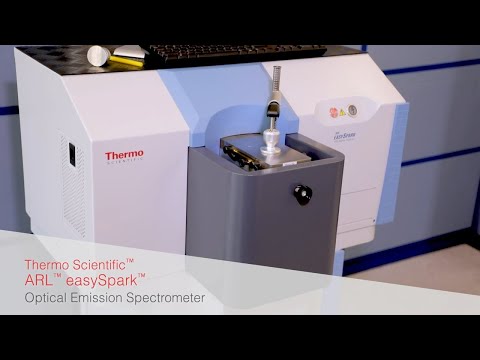
Spark OES is a key analytical technique in metal production, especially steel manufacturing, where technicians test elemental composition multiple times daily.
Video placeholder
  • Photo: Thermo Fisher Scientific: Spark OES: Where Having No Memory is a Good Thing
  • Video: Thermo Scientific Spectroscopy & Materials Analysis: ARL easySpark Bench-top Metals Analyzer product overview 

Understanding the memory effect in spark OES

Spark-generated plasma Optical Emission Spectroscopy, or spark OES, is frequently used as an analytical technique in metal production and fabrication. It is particularly useful in steel production, where technicians test the elemental composition of their products dozens of times per day.

The spark OES method works by generating sparks and a digital electrical source to create a plasma in an argon atmosphere around a metal sample. The electrical sparks ablate the material, driving off small particles from the surface of the sample. These miniscule particles are excited by the argon plasma and generate light in the UV-visible range. The light emitted depends on the elements present in the sample and on their concentration.

Thermo Fisher Scientific: Spark OES: Where Having No Memory is a Good Thing.Thermo Fisher Scientific: Spark OES: Where Having No Memory is a Good Thing.

A small but not insignificant portion of the analyte may remain as residue, both on the electrode creating the sparks and within the spark chamber. These residual particles are very likely to be excited during the next measurement, creating what is known as a “memory effect.” This memory effect can potentially result in artificially high measurements for subsequent samples and compromised analytical accuracy. Imagine that a given sample is high-chromium steel, and the next sample analyzed in the spark OES is chromium-free ultra-low carbon steel (ULC), for example: Any chromium residue from the first sample could create a memory effect, causing the second sample to appear to have higher levels of chromium than it should. The real-world outcome could be the mischaracterization of a batch of steel, perhaps leading to an expensive mistake like disposing of an allegedly defective or sub-standard lot of material that was in reality perfectly fine.

Traditional methods of mitigating the memory effect

The memory effect has been well-known since spark OES was first developed decades ago. Up to now there have been a few main strategies employed to mitigate the memory effect:

  • Exchanging the contaminated parts of the spark stand – In the past, even some spark OES instruments were designed with more than one spark stand to avoid memory effects when changing the matrix, for example from iron based materials to aluminum based materials. While changing out a spark stand or parts of spark stand like isolating inserts and electrodes certainly would minimize any carry-over contamination and memory effects, this obviously increased the costs associated with the technology and the process could be time-consuming.
  • Use of pin electrodes – So-called “pin electrodes” typically only have a diameter of a millimeter and thus provide less chance for particles from previous samples to stay on the tip of the electrode. Unfortunately, pin electrodes can only be used for applications with lower melting points like aluminum, and they are not suitable for iron and steel analysis. Also, their small size makes them less durable and leads to the electrodes having a shorter life span.
  • Cleaning procedures – Physical cleaning methods such as the use of specialized brushes or bursts of argon gas are traditional techniques used throughout laboratories of all kinds. In spark OES, they help to minimize analytical residues and mitigate memory effects.
  • Blank measurements – Incorporating measurements of “blanks” between sample runs helps to establish a baseline signal free from undesired residual elements. The choice of an appropriate blank sample (for instance, a pure iron sample would be useful when analyzing steel materials) and careful monitoring by operators are essential. Extra samples also means this method requires extra time.

A new spark OES design diminishes memory effect

As is often the case in scientific research and laboratory material analysis, an attempt to solve one problem serendipitously led to a solution of a different kind. While attempting to increase the stability of the spark OES instrument results over a scale of days, the scientists inadvertently found a way to decrease the memory effect. Most spark OES designs utilize a single stream of argon flowing straight down the center of the spark chamber. Argon flow is increased during analysis to increase the visibility of the analyte. (Argon does not absorb UV light so it does not interfere with the signal generated by the sample; the argon also helps avoid sample oxidation.) After the analysis, a touch more of argon is usually passed through the chamber to try to blow away any residual particles.

In an effort to remove black deposits that can build up in the spark chamber, additional channels of argon gas have been added to the chamber design. The new channels are oriented at angles to the spark stand, on either side of the original line of gas flow. This orientation creates turbulence in the area where black deposits can form. The gas currents not only prevented black deposits from forming, they cleared away so much residue from the spark stand that the memory effect was not seen any more.

A practical example from steel analysis

This new spark OES configuration has already demonstrated practical results. The graphs below in Figures 1 and 2 show the memory effect on chromium and nickel, respectively, in ultra low carbon (ULC) steel samples. After a steel sample containing 16.5% chromium and 11% nickel was analyzed, a sample of ULC steel was assayed. The measurements of the clean steel sample were expected to be about 0.0063% for Cr and 0.0032% for Ni. The results displayed here show that the first few measurements for both elements were elevated by as much as a factor of 10! Multiple trials had to be run before the residual particles were flushed and the memory effect was overcome to generate stable, accurate results.

Thermo Fisher Scientific: Spark OES: Where Having No Memory is a Good Thing.Thermo Fisher Scientific: Spark OES: Where Having No Memory is a Good Thing.

With the novel spark OES configuration featuring additional argon channels, the argon injected after the analysis of a Cr- and Ni-containing steel sample removed residual particles so efficiently that virtually no memory effect could be observed. In fact, the results were virtually identical to those found when a manual brush was used to ensure residual particles had been cleaned away. Notice in Figure 3 that even on the first run of the clean steel sample, the Cr and Ni values are in line with later analyses.

Thermo Fisher Scientific: Spark OES: Where Having No Memory is a Good Thing.Thermo Fisher Scientific: Spark OES: Where Having No Memory is a Good Thing.

Say goodbye to the memory effect

The well-known memory effect could be totally eliminated with this new spark stand concept featuring additional argon flow channels, at least where the analysis of steel and iron is concerned. This will not only save a lot of time which up to now has been necessary to either perform manual cleaning or to run blank samples several times. It will also avoid the transmittance of incorrect results and make the instrument totally trustable. We may not ever forget about the memory effect in spark OES, but we sure won’t miss it when it’s gone.

Additional Resources

Thermo Fisher Scientific
LinkedIn Logo
 

Related content

Analysis of rare earth elements in clay using XRF and XRD

Applications
| 2026 | Thermo Fisher Scientific
Instrumentation
XRD
Manufacturer
Thermo Fisher Scientific
Industries
Materials Testing

Measurement of TOC in Chloroisocyanuric Acid Used as Disinfectant

Applications
| 2026 | Shimadzu
Instrumentation
TOC
Manufacturer
Shimadzu
Industries
Pharma & Biopharma

High Precision Analysis of Major Components in Precious Metals by ICP-OES

Applications
| 2025 | Agilent Technologies
Instrumentation
ICP-OES
Manufacturer
Agilent Technologies
Industries
Materials Testing

Analysis of Heavy Metals in Baby FoodUsing ICP-MS

Applications
| 2025 | Shimadzu
Instrumentation
ICP/MS
Manufacturer
Shimadzu
Industries
Food & Agriculture

ICP-OES Analysis of Copper Recovered from Li-Ion Batteries for Foil Manufacturing

Applications
| 2025 | Agilent Technologies
Instrumentation
ICP-OES
Manufacturer
Agilent Technologies
Industries
Materials Testing
 

Related articles

JUNIOR STAR Grants at UCT Prague: Two talented women from abroad driving innovation in science
Article | Scientists

JUNIOR STAR Grants at UCT Prague: Two talented women from abroad driving innovation in science

Two outstanding early-career researchers at UCT Prague, Filipa Oliveira and Stella Gonsales, received prestigious GAČR JUNIOR STAR grants for innovative research in materials science and sustainable chemistry.
UCT Prague
tag
share
more
News from LabRulezICPMS Library - Week 06, 2026
Article | Application

News from LabRulezICPMS Library - Week 06, 2026

This week we bring you application notes by Agilent Technologies, Metrohm, Shimadzu and Thermo Fisher Scientific!
LabRulez
tag
share
more
Upgrade of TITAN transmission electron microscope ranks CEITEC among elite laboratories
Article | Science and research

Upgrade of TITAN transmission electron microscope ranks CEITEC among elite laboratories

A major upgrade of the TITAN electron microscope at CEITEC delivers atomic-scale resolution and advanced spectroscopy, placing the facility among the world’s leading research laboratories.
CEITEC
tag
share
more
Research from IOCB Prague reveals a previously unknown mechanism of genetic transcription
Article | Science and research

Research from IOCB Prague reveals a previously unknown mechanism of genetic transcription

Scientists at IOCB Prague reveal a previously unknown mechanism that initiates gene transcription. Using cryo-EM, they uncover how alarmone molecules enable RNA synthesis under stress.
Institute of Organic Chemistry and Biochemistry of the Czech Academy of Sciences
tag
share
more
 

Related content

Analysis of rare earth elements in clay using XRF and XRD

Applications
| 2026 | Thermo Fisher Scientific
Instrumentation
XRD
Manufacturer
Thermo Fisher Scientific
Industries
Materials Testing

Measurement of TOC in Chloroisocyanuric Acid Used as Disinfectant

Applications
| 2026 | Shimadzu
Instrumentation
TOC
Manufacturer
Shimadzu
Industries
Pharma & Biopharma

High Precision Analysis of Major Components in Precious Metals by ICP-OES

Applications
| 2025 | Agilent Technologies
Instrumentation
ICP-OES
Manufacturer
Agilent Technologies
Industries
Materials Testing

Analysis of Heavy Metals in Baby FoodUsing ICP-MS

Applications
| 2025 | Shimadzu
Instrumentation
ICP/MS
Manufacturer
Shimadzu
Industries
Food & Agriculture

ICP-OES Analysis of Copper Recovered from Li-Ion Batteries for Foil Manufacturing

Applications
| 2025 | Agilent Technologies
Instrumentation
ICP-OES
Manufacturer
Agilent Technologies
Industries
Materials Testing
 

Related articles

JUNIOR STAR Grants at UCT Prague: Two talented women from abroad driving innovation in science
Article | Scientists

JUNIOR STAR Grants at UCT Prague: Two talented women from abroad driving innovation in science

Two outstanding early-career researchers at UCT Prague, Filipa Oliveira and Stella Gonsales, received prestigious GAČR JUNIOR STAR grants for innovative research in materials science and sustainable chemistry.
UCT Prague
tag
share
more
News from LabRulezICPMS Library - Week 06, 2026
Article | Application

News from LabRulezICPMS Library - Week 06, 2026

This week we bring you application notes by Agilent Technologies, Metrohm, Shimadzu and Thermo Fisher Scientific!
LabRulez
tag
share
more
Upgrade of TITAN transmission electron microscope ranks CEITEC among elite laboratories
Article | Science and research

Upgrade of TITAN transmission electron microscope ranks CEITEC among elite laboratories

A major upgrade of the TITAN electron microscope at CEITEC delivers atomic-scale resolution and advanced spectroscopy, placing the facility among the world’s leading research laboratories.
CEITEC
tag
share
more
Research from IOCB Prague reveals a previously unknown mechanism of genetic transcription
Article | Science and research

Research from IOCB Prague reveals a previously unknown mechanism of genetic transcription

Scientists at IOCB Prague reveal a previously unknown mechanism that initiates gene transcription. Using cryo-EM, they uncover how alarmone molecules enable RNA synthesis under stress.
Institute of Organic Chemistry and Biochemistry of the Czech Academy of Sciences
tag
share
more
 

Related content

Analysis of rare earth elements in clay using XRF and XRD

Applications
| 2026 | Thermo Fisher Scientific
Instrumentation
XRD
Manufacturer
Thermo Fisher Scientific
Industries
Materials Testing

Measurement of TOC in Chloroisocyanuric Acid Used as Disinfectant

Applications
| 2026 | Shimadzu
Instrumentation
TOC
Manufacturer
Shimadzu
Industries
Pharma & Biopharma

High Precision Analysis of Major Components in Precious Metals by ICP-OES

Applications
| 2025 | Agilent Technologies
Instrumentation
ICP-OES
Manufacturer
Agilent Technologies
Industries
Materials Testing

Analysis of Heavy Metals in Baby FoodUsing ICP-MS

Applications
| 2025 | Shimadzu
Instrumentation
ICP/MS
Manufacturer
Shimadzu
Industries
Food & Agriculture

ICP-OES Analysis of Copper Recovered from Li-Ion Batteries for Foil Manufacturing

Applications
| 2025 | Agilent Technologies
Instrumentation
ICP-OES
Manufacturer
Agilent Technologies
Industries
Materials Testing
 

Related articles

JUNIOR STAR Grants at UCT Prague: Two talented women from abroad driving innovation in science
Article | Scientists

JUNIOR STAR Grants at UCT Prague: Two talented women from abroad driving innovation in science

Two outstanding early-career researchers at UCT Prague, Filipa Oliveira and Stella Gonsales, received prestigious GAČR JUNIOR STAR grants for innovative research in materials science and sustainable chemistry.
UCT Prague
tag
share
more
News from LabRulezICPMS Library - Week 06, 2026
Article | Application

News from LabRulezICPMS Library - Week 06, 2026

This week we bring you application notes by Agilent Technologies, Metrohm, Shimadzu and Thermo Fisher Scientific!
LabRulez
tag
share
more
Upgrade of TITAN transmission electron microscope ranks CEITEC among elite laboratories
Article | Science and research

Upgrade of TITAN transmission electron microscope ranks CEITEC among elite laboratories

A major upgrade of the TITAN electron microscope at CEITEC delivers atomic-scale resolution and advanced spectroscopy, placing the facility among the world’s leading research laboratories.
CEITEC
tag
share
more
Research from IOCB Prague reveals a previously unknown mechanism of genetic transcription
Article | Science and research

Research from IOCB Prague reveals a previously unknown mechanism of genetic transcription

Scientists at IOCB Prague reveal a previously unknown mechanism that initiates gene transcription. Using cryo-EM, they uncover how alarmone molecules enable RNA synthesis under stress.
Institute of Organic Chemistry and Biochemistry of the Czech Academy of Sciences
tag
share
more
 

Related content

Analysis of rare earth elements in clay using XRF and XRD

Applications
| 2026 | Thermo Fisher Scientific
Instrumentation
XRD
Manufacturer
Thermo Fisher Scientific
Industries
Materials Testing

Measurement of TOC in Chloroisocyanuric Acid Used as Disinfectant

Applications
| 2026 | Shimadzu
Instrumentation
TOC
Manufacturer
Shimadzu
Industries
Pharma & Biopharma

High Precision Analysis of Major Components in Precious Metals by ICP-OES

Applications
| 2025 | Agilent Technologies
Instrumentation
ICP-OES
Manufacturer
Agilent Technologies
Industries
Materials Testing

Analysis of Heavy Metals in Baby FoodUsing ICP-MS

Applications
| 2025 | Shimadzu
Instrumentation
ICP/MS
Manufacturer
Shimadzu
Industries
Food & Agriculture

ICP-OES Analysis of Copper Recovered from Li-Ion Batteries for Foil Manufacturing

Applications
| 2025 | Agilent Technologies
Instrumentation
ICP-OES
Manufacturer
Agilent Technologies
Industries
Materials Testing
 

Related articles

JUNIOR STAR Grants at UCT Prague: Two talented women from abroad driving innovation in science
Article | Scientists

JUNIOR STAR Grants at UCT Prague: Two talented women from abroad driving innovation in science

Two outstanding early-career researchers at UCT Prague, Filipa Oliveira and Stella Gonsales, received prestigious GAČR JUNIOR STAR grants for innovative research in materials science and sustainable chemistry.
UCT Prague
tag
share
more
News from LabRulezICPMS Library - Week 06, 2026
Article | Application

News from LabRulezICPMS Library - Week 06, 2026

This week we bring you application notes by Agilent Technologies, Metrohm, Shimadzu and Thermo Fisher Scientific!
LabRulez
tag
share
more
Upgrade of TITAN transmission electron microscope ranks CEITEC among elite laboratories
Article | Science and research

Upgrade of TITAN transmission electron microscope ranks CEITEC among elite laboratories

A major upgrade of the TITAN electron microscope at CEITEC delivers atomic-scale resolution and advanced spectroscopy, placing the facility among the world’s leading research laboratories.
CEITEC
tag
share
more
Research from IOCB Prague reveals a previously unknown mechanism of genetic transcription
Article | Science and research

Research from IOCB Prague reveals a previously unknown mechanism of genetic transcription

Scientists at IOCB Prague reveal a previously unknown mechanism that initiates gene transcription. Using cryo-EM, they uncover how alarmone molecules enable RNA synthesis under stress.
Institute of Organic Chemistry and Biochemistry of the Czech Academy of Sciences
tag
share
more
Other projects
GCMS
LCMS
Follow us
More information
WebinarsAbout usContact usTerms of use
LabRulez s.r.o. All rights reserved. Content available under a CC BY-SA 4.0 Attribution-ShareAlike