ICPMS
More information
WebinarsAbout usContact usTerms of use
LabRulez s.r.o. All rights reserved. Content available under a CC BY-SA 4.0 Attribution-ShareAlike
Author
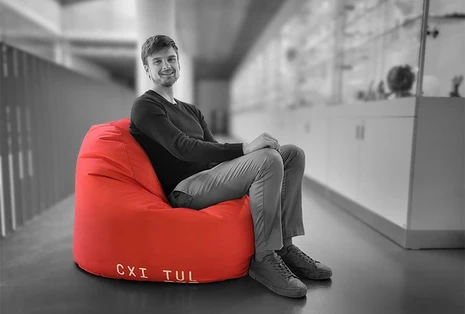
CXI TUL
CXI TUL
The Institute for Nanomaterials, Advanced Technologies and Innovations of the Technical University of Liberec, also known as CXI TUL, was founded in 2009. Our mission is to support TUL's long-term vision of collaboration with industry and innovation.
Tags
Article
Scientists
Science and research
Video
LinkedIn Logo

Ondřej Havelka: Laser can get rid of the chemistry of the beakers
We, 19.2.2025
| Original article from: CXI TUL
During his academic career, Ondřej Havelka has collected one prestigious award after another. However, he is not focused on awards but rather seeks new challenges.
Video placeholder
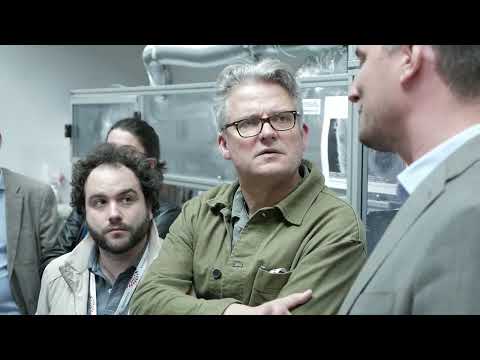
  • Photo: CXI TUL: Ondřej Havelka: Laser can get rid of the chemistry of the beakers
  • Video: TULiberec: TUL press trip

During his academic career he has collected one prestigious award after another. However, he is not interested in awards and instead he seeks new interesting challenges. With a head full of ambitious ideas that have the potential to transform the way we look at chemistry, and despite his wealth of experience, he realises that his scientific journey is still at the beginning.

He is as passionate about his love of coffee as he is about science. If you love it too, you might meet him in one of the cafes in Liberec. In them, and not only in them, he likes to taste different types coming from all over the world. Among his favourites are coffees from Panama, East Timor or Tanzania. "My research, which involves the use of lasers to shape matter at the nanoscale, can also be linked to coffee. For example, the laser fragmentation method I use for this can also be used for cold brew, i.e. cold coffee preparation," says Ondra from CXI TUL.

Garbage man, president or scientist?

Although science is now his passion, Ondra's journey did not necessarily have to end there. "I didn't want to do research. All through high school, I heard that I should go do math, physics and nuclear research and become a professor there. In the end, I decided not to go to either faculty. Instead, based on the recommendation of the head of the research on modular nuclear reactors in Řež, I applied to study nanotechnology at TUL, with the idea that after my studies I would anchor myself in a company and enjoy a quiet non-scientific life. And the very good reputation of the local student houses helped me in my final choice of this university," laughs Ondra. "Interestingly, it has always proven to me that even the most seemingly trivial thing can be a great indicator to decide on something."

Similarly, in the fifth grade, he chose a grammar school because of the new cafeteria, and that turned out to be the right choice. Although he didn't like the school very much, his outlook gradually changed. As a kid he wanted to be a garbage man, and a few months later he wanted to be president, mainly so he could cancel school outright. "I was bored at school, the assignments were taking up my free time, so I was looking for the shortest way to solve them. I was quite a pain in the neck at times. Even the teachers took a break when I was sick," he recalls. Eventually, though, he found a passion for education. His subject became laser nanotechnology, which allows him to look at things differently.

CXI TUL: Ondřej Havelka: Laser can get rid of the chemistry of the beakersCXI TUL: Ondřej Havelka: Laser can get rid of the chemistry of the beakers

Laser synthesis of nanoparticles

Instead of preparing nanoparticles using conventional wet chemical methods, he prepares them using a laser. And why is that? "The advantage of laser-prepared nanoparticles in liquid lies mainly in their atypical internal structure. The formation of such a structure occurs because of the extremely rapid cooling during their preparation. In other words, the nanoparticles released by the laser from the solid material first take the form of hot spheres of liquid metal, which cool and solidify extremely quickly on contact with the cold liquid. Because of the speed of this process, the atoms inside the nanoparticles don't have enough time to get to places where they would feel comfortable and instead solidify in places we wouldn't expect them to. This creates defects and clusters of atoms that are otherwise unstable in the long term. This gives the nanoparticles unique properties for a number of applications - especially catalysis. We use this advantage to purify water from a variety of pollutants," explains Ondra, who demonstrated the use of laser nanoparticles to purify water from oils, persistent organic substances, and antibiotics.

Nanotechnology for clean water

Antibiotic contamination of water has become a much-discussed problem in recent years because it threatens human health. The development of antibiotic resistance alone is already estimated to be responsible for hundreds of thousands of deaths a year. Moreover, other predictions warn that by 2050, resistance could result in up to 10 million deaths per year.

Experts from across disciplines are aware of the importance of the solution, which is why a special platform CZEPAR (Czech Platform for Antibiotic Resistance) was created in the Czech Republic, of which Ondra is a member. He deals with the solution of cleaning water from antibiotics, which is complicated due to their chemical nature. This is where laser-created nanoparticles come into play. They simply break down antibiotics into simpler substances. "We wanted to keep the process simple, so we developed special nanosheets that can break down antibiotics using visible light, potentially very well with sunlight."

The use of nanoalloys and light overcomes the disadvantages of alternative methods for water purification such as biological removal or adsorption. Biodegradation often shows low efficiency and adsorption, on the other hand, is prone to the back-release of antibiotics when external conditions change. Nanoalloys do not have these problems. Another advantage is the ability to manipulate the nanoparticles with a conventional magnet, allowing them to be easily removed from the water after the process is complete and subsequently reused. "This avoids the paradoxical scenario of removing the antibiotics but adding another potentially hazardous material to the water," Ondra adds. "Although the research is only at the beginning, the first results show a very promising direction for further research. We are already working on the possibility of further improvements," he concludes by discussing one of his research projects.

Chemistry without beakers

In addition to the application of nanoparticles for water purification, Ondra is newly involved in the actual shift in the form of laser nanotechnology. To work with nanoparticles, he stops using conventional laboratory glassware and instead uses a nanoprinter. This approach, for example, allows him to build more complex structures from the nanoparticles themselves. "It's amazing to see such a structure in operation. I like to say that the laser is a tool that can rid chemistry of its cachet and of the conventional ideas about its possibilities," Ondra explains, adding: "We often have very clear ideas about the shape of fields like chemistry or physics. However, the concept of fields that is only in our heads is gradually changing. This was evident, for example, at the last Nobel Prize ceremony, where two prizes were based on the topic of artificial intelligence."

CXI TUL: Ondřej Havelka: Laser can get rid of the chemistry of the beakersCXI TUL: Ondřej Havelka: Laser can get rid of the chemistry of the beakers

Teaching is important

Ondra has received a number of awards for his activities in the academic environment. Among them are three prestigious awards from the Minister of Education of the Czech Republic and two awards from IOP Publishing. However, he does not want to talk much about the awards. He enjoys the activities themselves. "I try to make sure that everything I do contains an element of enthusiasm. I like to pass this on to others, which is why I love teaching nanotechnology and bioengineering to students. I look for ways to transform the teaching for them, to make it useful, fun and something out of the ordinary. It's great to then see the students progress year on year in what they can do," he says, highlighting the importance of teaching future young scientists

New challenge: Developing a new nanotechnology

Ondra's dissertation defense is just around the corner. So what are his future plans? "I have been offered the opportunity to lead a materials research course in Germany. I don't know yet whether it will be again at the Max Planck Institute, where I worked last year, or at one of the German universities. There are now a number of negotiations going on around that with universities in the Excellence Initiative, which is a kind of equivalent of the American Ivy League. Good laboratory facilities where research ideas can be translated into reality will be essential. If all goes well, I would like to start developing a new type of nanotechnology," he adds.

CXI TUL: Ondřej Havelka: Laser can get rid of the chemistry of the beakersCXI TUL: Ondřej Havelka: Laser can get rid of the chemistry of the beakers

CXI TUL
LinkedIn Logo
 

Related content

Analysis of rare earth elements in clay using XRF and XRD

Applications
| 2026 | Thermo Fisher Scientific
Instrumentation
XRD
Manufacturer
Thermo Fisher Scientific
Industries
Materials Testing

Measurement of TOC in Chloroisocyanuric Acid Used as Disinfectant

Applications
| 2026 | Shimadzu
Instrumentation
TOC
Manufacturer
Shimadzu
Industries
Pharma & Biopharma

High Precision Analysis of Major Components in Precious Metals by ICP-OES

Applications
| 2025 | Agilent Technologies
Instrumentation
ICP-OES
Manufacturer
Agilent Technologies
Industries
Materials Testing

Analysis of Heavy Metals in Baby FoodUsing ICP-MS

Applications
| 2025 | Shimadzu
Instrumentation
ICP/MS
Manufacturer
Shimadzu
Industries
Food & Agriculture

ICP-OES Analysis of Copper Recovered from Li-Ion Batteries for Foil Manufacturing

Applications
| 2025 | Agilent Technologies
Instrumentation
ICP-OES
Manufacturer
Agilent Technologies
Industries
Materials Testing
 

Related articles

JUNIOR STAR Grants at UCT Prague: Two talented women from abroad driving innovation in science
Article | Scientists

JUNIOR STAR Grants at UCT Prague: Two talented women from abroad driving innovation in science

Two outstanding early-career researchers at UCT Prague, Filipa Oliveira and Stella Gonsales, received prestigious GAČR JUNIOR STAR grants for innovative research in materials science and sustainable chemistry.
UCT Prague
tag
share
more
News from LabRulezICPMS Library - Week 06, 2026
Article | Application

News from LabRulezICPMS Library - Week 06, 2026

This week we bring you application notes by Agilent Technologies, Metrohm, Shimadzu and Thermo Fisher Scientific!
LabRulez
tag
share
more
Upgrade of TITAN transmission electron microscope ranks CEITEC among elite laboratories
Article | Science and research

Upgrade of TITAN transmission electron microscope ranks CEITEC among elite laboratories

A major upgrade of the TITAN electron microscope at CEITEC delivers atomic-scale resolution and advanced spectroscopy, placing the facility among the world’s leading research laboratories.
CEITEC
tag
share
more
Research from IOCB Prague reveals a previously unknown mechanism of genetic transcription
Article | Science and research

Research from IOCB Prague reveals a previously unknown mechanism of genetic transcription

Scientists at IOCB Prague reveal a previously unknown mechanism that initiates gene transcription. Using cryo-EM, they uncover how alarmone molecules enable RNA synthesis under stress.
Institute of Organic Chemistry and Biochemistry of the Czech Academy of Sciences
tag
share
more
 

Related content

Analysis of rare earth elements in clay using XRF and XRD

Applications
| 2026 | Thermo Fisher Scientific
Instrumentation
XRD
Manufacturer
Thermo Fisher Scientific
Industries
Materials Testing

Measurement of TOC in Chloroisocyanuric Acid Used as Disinfectant

Applications
| 2026 | Shimadzu
Instrumentation
TOC
Manufacturer
Shimadzu
Industries
Pharma & Biopharma

High Precision Analysis of Major Components in Precious Metals by ICP-OES

Applications
| 2025 | Agilent Technologies
Instrumentation
ICP-OES
Manufacturer
Agilent Technologies
Industries
Materials Testing

Analysis of Heavy Metals in Baby FoodUsing ICP-MS

Applications
| 2025 | Shimadzu
Instrumentation
ICP/MS
Manufacturer
Shimadzu
Industries
Food & Agriculture

ICP-OES Analysis of Copper Recovered from Li-Ion Batteries for Foil Manufacturing

Applications
| 2025 | Agilent Technologies
Instrumentation
ICP-OES
Manufacturer
Agilent Technologies
Industries
Materials Testing
 

Related articles

JUNIOR STAR Grants at UCT Prague: Two talented women from abroad driving innovation in science
Article | Scientists

JUNIOR STAR Grants at UCT Prague: Two talented women from abroad driving innovation in science

Two outstanding early-career researchers at UCT Prague, Filipa Oliveira and Stella Gonsales, received prestigious GAČR JUNIOR STAR grants for innovative research in materials science and sustainable chemistry.
UCT Prague
tag
share
more
News from LabRulezICPMS Library - Week 06, 2026
Article | Application

News from LabRulezICPMS Library - Week 06, 2026

This week we bring you application notes by Agilent Technologies, Metrohm, Shimadzu and Thermo Fisher Scientific!
LabRulez
tag
share
more
Upgrade of TITAN transmission electron microscope ranks CEITEC among elite laboratories
Article | Science and research

Upgrade of TITAN transmission electron microscope ranks CEITEC among elite laboratories

A major upgrade of the TITAN electron microscope at CEITEC delivers atomic-scale resolution and advanced spectroscopy, placing the facility among the world’s leading research laboratories.
CEITEC
tag
share
more
Research from IOCB Prague reveals a previously unknown mechanism of genetic transcription
Article | Science and research

Research from IOCB Prague reveals a previously unknown mechanism of genetic transcription

Scientists at IOCB Prague reveal a previously unknown mechanism that initiates gene transcription. Using cryo-EM, they uncover how alarmone molecules enable RNA synthesis under stress.
Institute of Organic Chemistry and Biochemistry of the Czech Academy of Sciences
tag
share
more
 

Related content

Analysis of rare earth elements in clay using XRF and XRD

Applications
| 2026 | Thermo Fisher Scientific
Instrumentation
XRD
Manufacturer
Thermo Fisher Scientific
Industries
Materials Testing

Measurement of TOC in Chloroisocyanuric Acid Used as Disinfectant

Applications
| 2026 | Shimadzu
Instrumentation
TOC
Manufacturer
Shimadzu
Industries
Pharma & Biopharma

High Precision Analysis of Major Components in Precious Metals by ICP-OES

Applications
| 2025 | Agilent Technologies
Instrumentation
ICP-OES
Manufacturer
Agilent Technologies
Industries
Materials Testing

Analysis of Heavy Metals in Baby FoodUsing ICP-MS

Applications
| 2025 | Shimadzu
Instrumentation
ICP/MS
Manufacturer
Shimadzu
Industries
Food & Agriculture

ICP-OES Analysis of Copper Recovered from Li-Ion Batteries for Foil Manufacturing

Applications
| 2025 | Agilent Technologies
Instrumentation
ICP-OES
Manufacturer
Agilent Technologies
Industries
Materials Testing
 

Related articles

JUNIOR STAR Grants at UCT Prague: Two talented women from abroad driving innovation in science
Article | Scientists

JUNIOR STAR Grants at UCT Prague: Two talented women from abroad driving innovation in science

Two outstanding early-career researchers at UCT Prague, Filipa Oliveira and Stella Gonsales, received prestigious GAČR JUNIOR STAR grants for innovative research in materials science and sustainable chemistry.
UCT Prague
tag
share
more
News from LabRulezICPMS Library - Week 06, 2026
Article | Application

News from LabRulezICPMS Library - Week 06, 2026

This week we bring you application notes by Agilent Technologies, Metrohm, Shimadzu and Thermo Fisher Scientific!
LabRulez
tag
share
more
Upgrade of TITAN transmission electron microscope ranks CEITEC among elite laboratories
Article | Science and research

Upgrade of TITAN transmission electron microscope ranks CEITEC among elite laboratories

A major upgrade of the TITAN electron microscope at CEITEC delivers atomic-scale resolution and advanced spectroscopy, placing the facility among the world’s leading research laboratories.
CEITEC
tag
share
more
Research from IOCB Prague reveals a previously unknown mechanism of genetic transcription
Article | Science and research

Research from IOCB Prague reveals a previously unknown mechanism of genetic transcription

Scientists at IOCB Prague reveal a previously unknown mechanism that initiates gene transcription. Using cryo-EM, they uncover how alarmone molecules enable RNA synthesis under stress.
Institute of Organic Chemistry and Biochemistry of the Czech Academy of Sciences
tag
share
more
 

Related content

Analysis of rare earth elements in clay using XRF and XRD

Applications
| 2026 | Thermo Fisher Scientific
Instrumentation
XRD
Manufacturer
Thermo Fisher Scientific
Industries
Materials Testing

Measurement of TOC in Chloroisocyanuric Acid Used as Disinfectant

Applications
| 2026 | Shimadzu
Instrumentation
TOC
Manufacturer
Shimadzu
Industries
Pharma & Biopharma

High Precision Analysis of Major Components in Precious Metals by ICP-OES

Applications
| 2025 | Agilent Technologies
Instrumentation
ICP-OES
Manufacturer
Agilent Technologies
Industries
Materials Testing

Analysis of Heavy Metals in Baby FoodUsing ICP-MS

Applications
| 2025 | Shimadzu
Instrumentation
ICP/MS
Manufacturer
Shimadzu
Industries
Food & Agriculture

ICP-OES Analysis of Copper Recovered from Li-Ion Batteries for Foil Manufacturing

Applications
| 2025 | Agilent Technologies
Instrumentation
ICP-OES
Manufacturer
Agilent Technologies
Industries
Materials Testing
 

Related articles

JUNIOR STAR Grants at UCT Prague: Two talented women from abroad driving innovation in science
Article | Scientists

JUNIOR STAR Grants at UCT Prague: Two talented women from abroad driving innovation in science

Two outstanding early-career researchers at UCT Prague, Filipa Oliveira and Stella Gonsales, received prestigious GAČR JUNIOR STAR grants for innovative research in materials science and sustainable chemistry.
UCT Prague
tag
share
more
News from LabRulezICPMS Library - Week 06, 2026
Article | Application

News from LabRulezICPMS Library - Week 06, 2026

This week we bring you application notes by Agilent Technologies, Metrohm, Shimadzu and Thermo Fisher Scientific!
LabRulez
tag
share
more
Upgrade of TITAN transmission electron microscope ranks CEITEC among elite laboratories
Article | Science and research

Upgrade of TITAN transmission electron microscope ranks CEITEC among elite laboratories

A major upgrade of the TITAN electron microscope at CEITEC delivers atomic-scale resolution and advanced spectroscopy, placing the facility among the world’s leading research laboratories.
CEITEC
tag
share
more
Research from IOCB Prague reveals a previously unknown mechanism of genetic transcription
Article | Science and research

Research from IOCB Prague reveals a previously unknown mechanism of genetic transcription

Scientists at IOCB Prague reveal a previously unknown mechanism that initiates gene transcription. Using cryo-EM, they uncover how alarmone molecules enable RNA synthesis under stress.
Institute of Organic Chemistry and Biochemistry of the Czech Academy of Sciences
tag
share
more
Other projects
GCMS
LCMS
Follow us
More information
WebinarsAbout usContact usTerms of use
LabRulez s.r.o. All rights reserved. Content available under a CC BY-SA 4.0 Attribution-ShareAlike