ICPMS
More information
WebinarsAbout usContact usTerms of use
LabRulez s.r.o. All rights reserved. Content available under a CC BY-SA 4.0 Attribution-ShareAlike
Author
CEITEC
CEITEC
Since its establishment in 2011, CEITEC has quickly developed into a cutting-edge infrastructure for research which performs highly alongside the best institutes in Europe. Among the main priorities of CEITEC are the promotion of a motivating and dynamic international scientific environment, the provision of state-of-the-art research infrastructure, and the policy of open communication and equal opportunities.
Tags
Article
Scientists
Science and research
Popularization
Video
LinkedIn Logo

Pavel Plevka: I only give my team colleagues projects that I would be happy to work on myself

Th, 13.2.2025
| Original article from: CEITEC/Mgr. Halina Jílková
Virologist Pavel Plevka, two-time ERC grant holder at CEITEC MU, seeks new team members. He discusses virus research, team leadership, and opportunities for students and postdocs.
<ul><li><strong>Photo: CEITEC: </strong>Pavel Plevka: I only give my team colleagues projects that I would be happy to work on myself</li><li><strong>Video:</strong> <strong>Reason with Science: Viruses:</strong> The enigma of life with Pavel Plevka | Evolution of viruses | Importance of viruses</li></ul>
  • Photo: CEITEC: Pavel Plevka: I only give my team colleagues projects that I would be happy to work on myself
  • Video: Reason with Science: Viruses: The enigma of life with Pavel Plevka | Evolution of viruses | Importance of viruses

Structural virologist Pavel Plevka, a two-time ERC grant holder and head of a research group at CEITEC Masaryk University, is looking for new colleagues to join his team. Even if you are not a structural virologist seeking an inspiring research environment, this interview is worth reading. Pavel Plevka explains his focus on studying human viruses and bacteriophages, his approach to team leadership, and the opportunities available for students and postdoctoral researchers who want to work in CEITEC's international and interdisciplinary research environment.

Most people fear viruses and see them as something that causes problems. However, you look at viruses very closely in the lab, literally. What is so fascinating about structural virology that you have been awarded two ERC grants for research in this field?

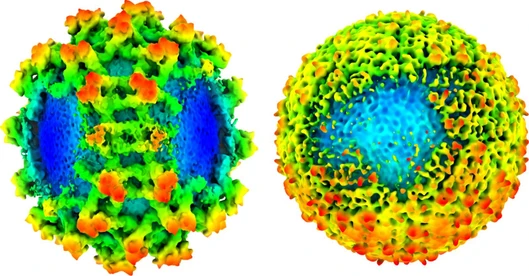
Studying viruses through structural methods—nowadays primarily cryo-electron microscopy—fascinates me because it allows us to uncover previously unknown biological landscapes. Each virus is a precisely assembled nanoparticle, honed by millions of years of evolution to infect host cells with remarkable efficiency. By examining viral structures and their interactions with host cells, we can dissect the key steps of the infection cycle: how viruses enter cells, hijack their machinery, and ensure the production of progeny virions. Investigating these processes at molecular or even atomic resolution not only satisfies my scientific curiosity (laughs) but also holds promise for developing novel antiviral therapies.

I received ERC grants thanks to a combination of advanced structural biology methods and a strong focus on studying human pathogens. The scientific questions we address go to the heart of viral life: What does a viral particle look like, and how does it function? How does a virus penetrate a host cell and deliver its genetic material? How does it ensure the replication of its genome? How does it evade the host's defence mechanisms? How are new viral particles assembled from individual components? Structural biology enables me to answer these questions, and our findings may contribute to the fight against viral infections—an ongoing motivation for my work.

What was your path to structural virology?

I became interested in viruses in high school. When I found out that there was a virology group led by Associate Professor Jitka Forstová at the Faculty of Science at Charles University, it was an obvious choice for me. During my PhD studies in Sweden, I learned to use X-ray crystallography to determine viral structures, and as a post-doc in the U.S., I applied cryo-electron microscopy for the same purpose. Thanks to technological advances, cryo-electron microscopy and tomography are now the main techniques used by my research group.

CEITEC of Masaryk University is known for its state-of-the-art research equipment. What laboratory methods and technologies do you use to study virus structures?

As I mentioned earlier, we use primarily cryo-electron microscopy (cryo-EM), which allows us to examine the structure of viruses at atomic resolution. Additionally, tomography enables us to observe the infection process within cells. Since CEITEC is part of the Czech Infrastructure for Integrative Structural Biology (CIISB), we have access to cutting-edge equipment that facilitates our research and allows us to keep up with the world's leading laboratories.

Beyond cryo-EM, we also use molecular biology methods for recombinant protein production, CRISPR-Cas systems for modifying host cell and viral genomes, and biochemical techniques that help us understand the interactions between viral proteins and their receptors or antibodies.

What is the future direction of structural virology, and what innovations can we anticipate in the coming years?

Structural virology is shifting from simply characterizing viral particle structures to describing the molecular mechanisms of viral infection. From a technological standpoint, cryo-electron microscopy is indispensable, as its continuously improving resolution allows for increasingly detailed insights into virus interactions with cellular components. Cryo-electron tomography (cryo-ET) enables us to reconstruct three-dimensional structures of infected cells and observe the impact of viral infections in situ. For instance, observing how enteroviruses exploit membrane vesicle rupture during infection to enter the cytoplasm was fascinating.

I am also particularly interested in studying bacteriophages, which function as remarkable molecular machines. Our research explores bacteriophages as a potential therapeutic alternative to antibiotics, particularly for treating infections caused by antibiotic-resistant bacteria. Their ability to selectively target specific bacterial strains without affecting other cells makes them a promising tool for future personalized medicine, opening exciting opportunities for integrating virology with medical research.

What do you consider to be your team's most significant achievement so far? Is there a specific discovery that you are particularly proud of?

I am always delighted when someone in our group makes a discovery, regardless of its perceived significance, as the importance of a finding is often subjective. This makes it difficult to single out any one discovery. However, I am particularly proud of our research on enteroviruses, where we demonstrated how they enter host cells and release their genome from the viral particle into the cytoplasm. Our work on bacteriophage structures and their intricate mechanisms for hijacking bacterial cells to produce progeny is equally fascinating.

Your team gives the impression of being a well-tuned machine. How do you collaborate?

I place great importance on ensuring that my research group functions effectively. Selecting the right collaborators is crucial; I strive to bring in students and post-docs who are internally motivated and capable of working constructively with colleagues. Clear communication within the group is essential, so I try to be accessible and approachable. As a team, we meet twice a week. One meeting is dedicated to discussing articles relevant to our research, while the other features two group members presenting updates on their projects. After this meeting, I hold one-on-one discussions with each presenter to address challenges related to their work and set future directions.

Additionally, as part of CEITEC's annual staff evaluation process, I meet individually with each group member to discuss their working conditions and professional development. To foster a positive team environment, we organize a non-work-related, one-day teambuilding event twice a year and hold several group dinners throughout the year, often accompanied by board games, movie nights, or barbecues.

CEITEC: Pavel Plevka: I only give my team colleagues projects that I would be happy to work on myselfCEITEC: Pavel Plevka: I only give my team colleagues projects that I would be happy to work on myself

What qualities and skills do you look for in new team members? Who are you currently looking for?

My group's research focuses on the structural characterization of viruses and their replication cycle within infected cells. Ideally, I seek colleagues with experience in virology and cryo-electron microscopy; however, such specialists are rare worldwide. Therefore, I am interested in motivated and curious individuals eager to learn structural biology and unafraid of working with human pathogens. I value prior international research experience, as my time in Sweden and the U.S. has shown me how it broadens one's perspective, though it is not a requirement. We are looking for PhD students and post-docs to join our team.

What opportunities do you offer to candidates who want to join your team?

Our team offers the opportunity to participate in studies on viral structures and infection mechanisms. I believe it is essential to assign only those projects that I would personally find engaging. While projects are assigned individually, I encourage team members to collaborate and assist each other in solving specific methodological challenges. A major advantage of CEITEC is access to state-of-the-art technologies housed in shared laboratories. The experts in these facilities have extensive experience with instrumentation and data analysis, significantly accelerating our research. The most relevant facilities for our group include cryo-electron microscopy, light microscopy, macromolecular characterization, and mass spectrometry labs.

In addition to research work, I expect each group member to attend one or two conferences or training courses annually. My group is currently involved in ERC-Consolidator BioPhage, the National Institute of Virology and Bacteriology (NIVB), and NETPHARM projects.

The fundamental trait of a good scientist is natural curiosity, the drive to "go just a little further." What scientific challenges do you plan to tackle in the coming years?

I mentioned my group's current research topics earlier in this interview. Our new projects build upon them and include characterizing bacteriophage spread within biofilms using light-sheet fluorescence microscopy and genetically modified phages; describing bacteriophage replication directly in cells using a novel system that allows us to bypass the need for complex preparation of ultrathin samples for transmission electron microscopy; studying the mechanisms of tick-borne encephalitis virus neutralization and activation by antibodies; determining the mechanism of endosomal membrane rupture and its role in non-enveloped virus cell entry; and we also work to resolve the structures of viruses that infect less-studied organisms, such as ciliates.

CEITEC
LinkedIn Logo
 

Related content

Observation of the Automotive Cylindrical Lithium-Ion Battery “4680” Using a Micro-Focus X-ray CT System

Applications
| 2025 | Shimadzu
Instrumentation
X-ray
Manufacturer
Shimadzu
Industries
Energy & Chemicals

Torsional and Pinching Dynamic Characteristics Testing of Rubber Vibration Isolators [JIS K6385]

Applications
| 2025 | Shimadzu
Instrumentation
Mechanical testing
Manufacturer
Shimadzu
Industries
Materials Testing

Determination of 21 Elements in Fertilizers using Autodilution with ICP-OES

Applications
| 2025 | Agilent Technologies
Instrumentation
ICP-OES
Manufacturer
Agilent Technologies
Industries
Food & Agriculture

Determination of Toxic Elements in Chilli Powder using Shimadzu ICPMS-2050

Posters
| 2025 | Shimadzu (AOAC)
Instrumentation
ICP/MS
Manufacturer
Shimadzu
Industries
Food & Agriculture

Screening Analysis of Trace Heavy Metals in Powdered Milk

Posters
| 2025 | Shimadzu (AOAC)
Instrumentation
X-ray
Manufacturer
Shimadzu
Industries
Food & Agriculture
 

Related articles

IOCB Prague unveils a fundamentally faster, more affordable way to produce quantum-grade nanodiamonds
Article | Science and research

IOCB Prague unveils a fundamentally faster, more affordable way to produce quantum-grade nanodiamonds

IOCB Prague scientists led by Dr. Petr Cígler developed a method to create quantum nanodiamonds within minutes—over 1,000× faster than before, paving the way for affordable large-scale nanosensor production.
Institute of Organic Chemistry and Biochemistry of the Czech Academy of Sciences
tag
share
more
Webinars LabRulezICPMS Week 46/2025
Article | Webinars

Webinars LabRulezICPMS Week 46/2025

12 webinars: ADS, battery, biofuel, chemisorption, erythropoiesis, ICP-OES, imaging, MOFs, Raman, surface analysis, TGA/DSC/IR, XPS
LabRulez
tag
share
more
Low-Temperature Synthesis of Monetite/Dextran Hybrid Coatings with Tailored Corrosion Resistance on Ti6Al4V
Scientific article | Science and research

Low-Temperature Synthesis of Monetite/Dextran Hybrid Coatings with Tailored Corrosion Resistance on Ti6Al4V

Monetite/Dextran hybrid coatings synthesized below 80 °C on Ti6Al4V greatly enhanced corrosion resistance, showing promise as sustainable, biocompatible coatings for next-gen implants.
LabRulez
tag
share
more
Customized microreactors: 3D printing has facilitated the development of polymer brushes for biosensors
Article | Science and research

Customized microreactors: 3D printing has facilitated the development of polymer brushes for biosensors

Researchers from the Czech Academy of Sciences developed a 3D-printed microfluidic reactor enabling faster, greener, and higher-quality synthesis of polymer brushes — the foundation of modern biosensors.
Akademie věd České republiky
tag
share
more
 

Related content

Observation of the Automotive Cylindrical Lithium-Ion Battery “4680” Using a Micro-Focus X-ray CT System

Applications
| 2025 | Shimadzu
Instrumentation
X-ray
Manufacturer
Shimadzu
Industries
Energy & Chemicals

Torsional and Pinching Dynamic Characteristics Testing of Rubber Vibration Isolators [JIS K6385]

Applications
| 2025 | Shimadzu
Instrumentation
Mechanical testing
Manufacturer
Shimadzu
Industries
Materials Testing

Determination of 21 Elements in Fertilizers using Autodilution with ICP-OES

Applications
| 2025 | Agilent Technologies
Instrumentation
ICP-OES
Manufacturer
Agilent Technologies
Industries
Food & Agriculture

Determination of Toxic Elements in Chilli Powder using Shimadzu ICPMS-2050

Posters
| 2025 | Shimadzu (AOAC)
Instrumentation
ICP/MS
Manufacturer
Shimadzu
Industries
Food & Agriculture

Screening Analysis of Trace Heavy Metals in Powdered Milk

Posters
| 2025 | Shimadzu (AOAC)
Instrumentation
X-ray
Manufacturer
Shimadzu
Industries
Food & Agriculture
 

Related articles

IOCB Prague unveils a fundamentally faster, more affordable way to produce quantum-grade nanodiamonds
Article | Science and research

IOCB Prague unveils a fundamentally faster, more affordable way to produce quantum-grade nanodiamonds

IOCB Prague scientists led by Dr. Petr Cígler developed a method to create quantum nanodiamonds within minutes—over 1,000× faster than before, paving the way for affordable large-scale nanosensor production.
Institute of Organic Chemistry and Biochemistry of the Czech Academy of Sciences
tag
share
more
Webinars LabRulezICPMS Week 46/2025
Article | Webinars

Webinars LabRulezICPMS Week 46/2025

12 webinars: ADS, battery, biofuel, chemisorption, erythropoiesis, ICP-OES, imaging, MOFs, Raman, surface analysis, TGA/DSC/IR, XPS
LabRulez
tag
share
more
Low-Temperature Synthesis of Monetite/Dextran Hybrid Coatings with Tailored Corrosion Resistance on Ti6Al4V
Scientific article | Science and research

Low-Temperature Synthesis of Monetite/Dextran Hybrid Coatings with Tailored Corrosion Resistance on Ti6Al4V

Monetite/Dextran hybrid coatings synthesized below 80 °C on Ti6Al4V greatly enhanced corrosion resistance, showing promise as sustainable, biocompatible coatings for next-gen implants.
LabRulez
tag
share
more
Customized microreactors: 3D printing has facilitated the development of polymer brushes for biosensors
Article | Science and research

Customized microreactors: 3D printing has facilitated the development of polymer brushes for biosensors

Researchers from the Czech Academy of Sciences developed a 3D-printed microfluidic reactor enabling faster, greener, and higher-quality synthesis of polymer brushes — the foundation of modern biosensors.
Akademie věd České republiky
tag
share
more
 

Related content

Observation of the Automotive Cylindrical Lithium-Ion Battery “4680” Using a Micro-Focus X-ray CT System

Applications
| 2025 | Shimadzu
Instrumentation
X-ray
Manufacturer
Shimadzu
Industries
Energy & Chemicals

Torsional and Pinching Dynamic Characteristics Testing of Rubber Vibration Isolators [JIS K6385]

Applications
| 2025 | Shimadzu
Instrumentation
Mechanical testing
Manufacturer
Shimadzu
Industries
Materials Testing

Determination of 21 Elements in Fertilizers using Autodilution with ICP-OES

Applications
| 2025 | Agilent Technologies
Instrumentation
ICP-OES
Manufacturer
Agilent Technologies
Industries
Food & Agriculture

Determination of Toxic Elements in Chilli Powder using Shimadzu ICPMS-2050

Posters
| 2025 | Shimadzu (AOAC)
Instrumentation
ICP/MS
Manufacturer
Shimadzu
Industries
Food & Agriculture

Screening Analysis of Trace Heavy Metals in Powdered Milk

Posters
| 2025 | Shimadzu (AOAC)
Instrumentation
X-ray
Manufacturer
Shimadzu
Industries
Food & Agriculture
 

Related articles

IOCB Prague unveils a fundamentally faster, more affordable way to produce quantum-grade nanodiamonds
Article | Science and research

IOCB Prague unveils a fundamentally faster, more affordable way to produce quantum-grade nanodiamonds

IOCB Prague scientists led by Dr. Petr Cígler developed a method to create quantum nanodiamonds within minutes—over 1,000× faster than before, paving the way for affordable large-scale nanosensor production.
Institute of Organic Chemistry and Biochemistry of the Czech Academy of Sciences
tag
share
more
Webinars LabRulezICPMS Week 46/2025
Article | Webinars

Webinars LabRulezICPMS Week 46/2025

12 webinars: ADS, battery, biofuel, chemisorption, erythropoiesis, ICP-OES, imaging, MOFs, Raman, surface analysis, TGA/DSC/IR, XPS
LabRulez
tag
share
more
Low-Temperature Synthesis of Monetite/Dextran Hybrid Coatings with Tailored Corrosion Resistance on Ti6Al4V
Scientific article | Science and research

Low-Temperature Synthesis of Monetite/Dextran Hybrid Coatings with Tailored Corrosion Resistance on Ti6Al4V

Monetite/Dextran hybrid coatings synthesized below 80 °C on Ti6Al4V greatly enhanced corrosion resistance, showing promise as sustainable, biocompatible coatings for next-gen implants.
LabRulez
tag
share
more
Customized microreactors: 3D printing has facilitated the development of polymer brushes for biosensors
Article | Science and research

Customized microreactors: 3D printing has facilitated the development of polymer brushes for biosensors

Researchers from the Czech Academy of Sciences developed a 3D-printed microfluidic reactor enabling faster, greener, and higher-quality synthesis of polymer brushes — the foundation of modern biosensors.
Akademie věd České republiky
tag
share
more
 

Related content

Observation of the Automotive Cylindrical Lithium-Ion Battery “4680” Using a Micro-Focus X-ray CT System

Applications
| 2025 | Shimadzu
Instrumentation
X-ray
Manufacturer
Shimadzu
Industries
Energy & Chemicals

Torsional and Pinching Dynamic Characteristics Testing of Rubber Vibration Isolators [JIS K6385]

Applications
| 2025 | Shimadzu
Instrumentation
Mechanical testing
Manufacturer
Shimadzu
Industries
Materials Testing

Determination of 21 Elements in Fertilizers using Autodilution with ICP-OES

Applications
| 2025 | Agilent Technologies
Instrumentation
ICP-OES
Manufacturer
Agilent Technologies
Industries
Food & Agriculture

Determination of Toxic Elements in Chilli Powder using Shimadzu ICPMS-2050

Posters
| 2025 | Shimadzu (AOAC)
Instrumentation
ICP/MS
Manufacturer
Shimadzu
Industries
Food & Agriculture

Screening Analysis of Trace Heavy Metals in Powdered Milk

Posters
| 2025 | Shimadzu (AOAC)
Instrumentation
X-ray
Manufacturer
Shimadzu
Industries
Food & Agriculture
 

Related articles

IOCB Prague unveils a fundamentally faster, more affordable way to produce quantum-grade nanodiamonds
Article | Science and research

IOCB Prague unveils a fundamentally faster, more affordable way to produce quantum-grade nanodiamonds

IOCB Prague scientists led by Dr. Petr Cígler developed a method to create quantum nanodiamonds within minutes—over 1,000× faster than before, paving the way for affordable large-scale nanosensor production.
Institute of Organic Chemistry and Biochemistry of the Czech Academy of Sciences
tag
share
more
Webinars LabRulezICPMS Week 46/2025
Article | Webinars

Webinars LabRulezICPMS Week 46/2025

12 webinars: ADS, battery, biofuel, chemisorption, erythropoiesis, ICP-OES, imaging, MOFs, Raman, surface analysis, TGA/DSC/IR, XPS
LabRulez
tag
share
more
Low-Temperature Synthesis of Monetite/Dextran Hybrid Coatings with Tailored Corrosion Resistance on Ti6Al4V
Scientific article | Science and research

Low-Temperature Synthesis of Monetite/Dextran Hybrid Coatings with Tailored Corrosion Resistance on Ti6Al4V

Monetite/Dextran hybrid coatings synthesized below 80 °C on Ti6Al4V greatly enhanced corrosion resistance, showing promise as sustainable, biocompatible coatings for next-gen implants.
LabRulez
tag
share
more
Customized microreactors: 3D printing has facilitated the development of polymer brushes for biosensors
Article | Science and research

Customized microreactors: 3D printing has facilitated the development of polymer brushes for biosensors

Researchers from the Czech Academy of Sciences developed a 3D-printed microfluidic reactor enabling faster, greener, and higher-quality synthesis of polymer brushes — the foundation of modern biosensors.
Akademie věd České republiky
tag
share
more
Other projects
GCMS
LCMS
Follow us
More information
WebinarsAbout usContact usTerms of use
LabRulez s.r.o. All rights reserved. Content available under a CC BY-SA 4.0 Attribution-ShareAlike