ICPMS
More information
WebinarsAbout usContact usTerms of use
LabRulez s.r.o. All rights reserved. Content available under a CC BY-SA 4.0 Attribution-ShareAlike
Author
Institute of Organic Chemistry and Biochemistry of the Czech Academy of Sciences
The Institute of Organic Chemistry and Biochemistry of the Czech Academy of Sciences (IOCB Prague) is a leading scientific institution in the Czech Republic, recognized internationally. Its primary mission is basic research in the fields of chemical biology and medicinal chemistry, organic and material oriented chemistry, chemistry of natural compounds, biochemistry and molecular biology, physical chemistry, theoretical chemistry, and analytical chemistry.
Tags
Article
Video
Science and research
LinkedIn Logo

New Czech company linked to IOCB Prague to enter global gene therapy field

Th, 27.6.2024
| Original article from: IOCB Prague
Technology from the laboratories of IOCB Prague has been given an extraordinary opportunity to succeed in the rapidly developing segment of gene therapy.
Video placeholder
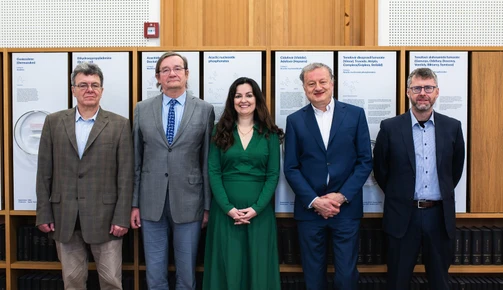
  • Photo: ÚOCHB / Tomáš Belloň: The co-founders of Adalid Sciences (from the left): František Sedlák, Petr Cígler, Klára Grantz Šašková, David Schreib.
  • Video: IOCB Prague: New Czech Company Linked to IOCB Prague to Enter Global Gene Therapy Field.

Technology from the laboratories of IOCB Prague has been given an extraordinary opportunity to succeed in the rapidly developing segment of gene therapy. The results of successful research are set to be advanced by a newly established private company called Adalid Sciences, which is being supported with a major investment from BTL Group, a leading manufacturer of medical technologies.

The story begins with the discovery of new lipid nanoparticles with a comic book name coined by Dr. Petr Cígler and Dr. Klára Grantz Šašková of IOCB Prague. Acting as a sort of imaginary courier, their XMAN is capable of safely transporting nucleic acids, either the basic building blocks of DNA or the long strands of RNA, into cells. At the same time, the potential of such a molecular transport device is constantly growing because the field of gene therapy has recently been developing at break-neck speed. Nucleic acids can be used to suppress or, conversely, replace or directly repair incorrect genetic information, making it possible to fight diseases that are difficult to treat. They also play an important role in the development of vaccines, both those targeting infectious diseases as well as oncological ones.

ÚOCHB / Tomáš Belloň: The co-founders of Adalid Sciences (from the left): František Sedlák, Petr Cígler, Klára Grantz Šašková, David Schreib.ÚOCHB / Tomáš Belloň: The co-founders of Adalid Sciences (from the left): František Sedlák, Petr Cígler, Klára Grantz Šašková, David Schreib.

Therefore, the new company, Adalid Sciences, has a unique opportunity to assume a permanent position in the global pharmaceutical market. This is also possible thanks to the extraordinary support provided by the IOCB environment, without which promising discoveries could hardly navigate the proverbial valley of death and have any hope of achieving commercial success. Professional support comes from the institute’s subsidiary transfer company, IOCB Tech, which helps bring promising scientific ideas to life.

“There’s something in the very DNA of our institute that inspires colleagues to not only engage in outstanding science but also to apply their results in practice. And we’ve been succeeding at this since the 1960s. Not only do Antonín Holý’s drugs have their predecessors, but they’ll hopefully also have their successors,” says IOCB director Prof. Jan Konvalinka. He continues: “I appreciate the fact that successful companies invest in modern technologies that can be beneficial to everyone. The contribution of IOCB Prague to this venture lies not only in our patent but also in our brilliant scientists. They’re truly among the best that Czech science has to offer.”

The investment that Adalid received from BTL is exceptional in the Czech milieu: a major manufacturer of medical technologies has promised to invest millions of euros. The technical director of BTL, Tomáš Drbal, explains why they decided to take this step: “BTL Group is a world leader in several medical fields, so strategic investments in related areas such as biotech and pharma are a good match for the group’s vision. The outlook for the industry and the product is especially important to us, but even more important are the people who develop it. The credibility of the scientific institution from which they come to Adalid, as well as their professional and personal qualities, played a crucial role in our decision to make the investment.”

ÚOCHB / Tomáš Belloň:  The versatility of the nanoparticles lies in the fact that they can work equally well for different nucleic acids. This can significantly accelerate drug development.ÚOCHB / Tomáš Belloň: The versatility of the nanoparticles lies in the fact that they can work equally well for different nucleic acids. This can significantly accelerate drug development.

Adalid is being founded by IOCB researchers Klára Šašková, who will serve as the director of the new company, and Petr Cígler. In addition, one of the founders is the physician František Sedlák. Klára Šašková explains why, in her opinion, Adalid has a chance to break through: “Our advantage is that we offer lipid nanoparticles, which have significantly better properties compared to existing ones. Furthermore, not only do our particles demonstrate higher efficiency, they’re also nontoxic and are well tolerated by organisms even after repeated administration. Now we face challenging preclinical testing and negotiations with commercial partners looking for a transport system for their therapeutic nucleic acid. The goal is to get our products into clinical trials as soon as possible and emerge as one of the major players in the global field of genetic medicine.”

ÚOCHB / Tomáš Belloň: XMAN lipid nanoparticle for easy transport of various types of therapeutic nucleic acids into cells.ÚOCHB / Tomáš Belloň: XMAN lipid nanoparticle for easy transport of various types of therapeutic nucleic acids into cells.

The groundbreaking research was published three years ago in the scientific journal Advanced Functional Materials, with the study co-led by Petr Cígler, head of the Synthetic Nanochemistry research group at IOCB Prague, who has extensive experience in developing functional transport systems for nucleic acids. He explains: “With the XMANs, we’ve managed to design a family of molecules with exceptional chemical and biological properties. We’ve been modifying the basic structure over time to improve those properties. We now have a number of unique substances that, together with nucleic acids, are capable of forming therapeutically highly active nanoparticles.”

Gene therapy offers therapeutic options for a wide range of incurable diseases, and it is already helping many people. Examples include patients with spinal muscular atrophy, congenital visual disorders, hemophilia, or oncological diseases. Thanks to scientific advances, hope is dawning for millions of others, and not just those with rare congenital diseases. The new Czech company Adalid Sciences is poised to play a key role in this important segment of contemporary medicine.

ÚOCHB / Tomáš Belloň: New Czech company linked to IOCB Prague to enter global gene therapy field.ÚOCHB / Tomáš Belloň: New Czech company linked to IOCB Prague to enter global gene therapy field.

ÚOCHB / Tomáš Belloň: New Czech company linked to IOCB Prague to enter global gene therapy field.ÚOCHB / Tomáš Belloň: New Czech company linked to IOCB Prague to enter global gene therapy field.

Institute of Organic Chemistry and Biochemistry of the Czech Academy of Sciences
LinkedIn Logo
 

Related content

Observation of the Automotive Cylindrical Lithium-Ion Battery “4680” Using a Micro-Focus X-ray CT System

Applications
| 2025 | Shimadzu
Instrumentation
X-ray
Manufacturer
Shimadzu
Industries
Energy & Chemicals

Torsional and Pinching Dynamic Characteristics Testing of Rubber Vibration Isolators [JIS K6385]

Applications
| 2025 | Shimadzu
Instrumentation
Mechanical testing
Manufacturer
Shimadzu
Industries
Materials Testing

Determination of 21 Elements in Fertilizers using Autodilution with ICP-OES

Applications
| 2025 | Agilent Technologies
Instrumentation
ICP-OES
Manufacturer
Agilent Technologies
Industries
Food & Agriculture

Determination of Toxic Elements in Chilli Powder using Shimadzu ICPMS-2050

Posters
| 2025 | Shimadzu (AOAC)
Instrumentation
ICP/MS
Manufacturer
Shimadzu
Industries
Food & Agriculture

Screening Analysis of Trace Heavy Metals in Powdered Milk

Posters
| 2025 | Shimadzu (AOAC)
Instrumentation
X-ray
Manufacturer
Shimadzu
Industries
Food & Agriculture
 

Related articles

IOCB Prague unveils a fundamentally faster, more affordable way to produce quantum-grade nanodiamonds
Article | Science and research

IOCB Prague unveils a fundamentally faster, more affordable way to produce quantum-grade nanodiamonds

IOCB Prague scientists led by Dr. Petr Cígler developed a method to create quantum nanodiamonds within minutes—over 1,000× faster than before, paving the way for affordable large-scale nanosensor production.
Institute of Organic Chemistry and Biochemistry of the Czech Academy of Sciences
tag
share
more
Webinars LabRulezICPMS Week 46/2025
Article | Webinars

Webinars LabRulezICPMS Week 46/2025

12 webinars: ADS, battery, biofuel, chemisorption, erythropoiesis, ICP-OES, imaging, MOFs, Raman, surface analysis, TGA/DSC/IR, XPS
LabRulez
tag
share
more
Low-Temperature Synthesis of Monetite/Dextran Hybrid Coatings with Tailored Corrosion Resistance on Ti6Al4V
Scientific article | Science and research

Low-Temperature Synthesis of Monetite/Dextran Hybrid Coatings with Tailored Corrosion Resistance on Ti6Al4V

Monetite/Dextran hybrid coatings synthesized below 80 °C on Ti6Al4V greatly enhanced corrosion resistance, showing promise as sustainable, biocompatible coatings for next-gen implants.
LabRulez
tag
share
more
Customized microreactors: 3D printing has facilitated the development of polymer brushes for biosensors
Article | Science and research

Customized microreactors: 3D printing has facilitated the development of polymer brushes for biosensors

Researchers from the Czech Academy of Sciences developed a 3D-printed microfluidic reactor enabling faster, greener, and higher-quality synthesis of polymer brushes — the foundation of modern biosensors.
Akademie věd České republiky
tag
share
more
 

Related content

Observation of the Automotive Cylindrical Lithium-Ion Battery “4680” Using a Micro-Focus X-ray CT System

Applications
| 2025 | Shimadzu
Instrumentation
X-ray
Manufacturer
Shimadzu
Industries
Energy & Chemicals

Torsional and Pinching Dynamic Characteristics Testing of Rubber Vibration Isolators [JIS K6385]

Applications
| 2025 | Shimadzu
Instrumentation
Mechanical testing
Manufacturer
Shimadzu
Industries
Materials Testing

Determination of 21 Elements in Fertilizers using Autodilution with ICP-OES

Applications
| 2025 | Agilent Technologies
Instrumentation
ICP-OES
Manufacturer
Agilent Technologies
Industries
Food & Agriculture

Determination of Toxic Elements in Chilli Powder using Shimadzu ICPMS-2050

Posters
| 2025 | Shimadzu (AOAC)
Instrumentation
ICP/MS
Manufacturer
Shimadzu
Industries
Food & Agriculture

Screening Analysis of Trace Heavy Metals in Powdered Milk

Posters
| 2025 | Shimadzu (AOAC)
Instrumentation
X-ray
Manufacturer
Shimadzu
Industries
Food & Agriculture
 

Related articles

IOCB Prague unveils a fundamentally faster, more affordable way to produce quantum-grade nanodiamonds
Article | Science and research

IOCB Prague unveils a fundamentally faster, more affordable way to produce quantum-grade nanodiamonds

IOCB Prague scientists led by Dr. Petr Cígler developed a method to create quantum nanodiamonds within minutes—over 1,000× faster than before, paving the way for affordable large-scale nanosensor production.
Institute of Organic Chemistry and Biochemistry of the Czech Academy of Sciences
tag
share
more
Webinars LabRulezICPMS Week 46/2025
Article | Webinars

Webinars LabRulezICPMS Week 46/2025

12 webinars: ADS, battery, biofuel, chemisorption, erythropoiesis, ICP-OES, imaging, MOFs, Raman, surface analysis, TGA/DSC/IR, XPS
LabRulez
tag
share
more
Low-Temperature Synthesis of Monetite/Dextran Hybrid Coatings with Tailored Corrosion Resistance on Ti6Al4V
Scientific article | Science and research

Low-Temperature Synthesis of Monetite/Dextran Hybrid Coatings with Tailored Corrosion Resistance on Ti6Al4V

Monetite/Dextran hybrid coatings synthesized below 80 °C on Ti6Al4V greatly enhanced corrosion resistance, showing promise as sustainable, biocompatible coatings for next-gen implants.
LabRulez
tag
share
more
Customized microreactors: 3D printing has facilitated the development of polymer brushes for biosensors
Article | Science and research

Customized microreactors: 3D printing has facilitated the development of polymer brushes for biosensors

Researchers from the Czech Academy of Sciences developed a 3D-printed microfluidic reactor enabling faster, greener, and higher-quality synthesis of polymer brushes — the foundation of modern biosensors.
Akademie věd České republiky
tag
share
more
 

Related content

Observation of the Automotive Cylindrical Lithium-Ion Battery “4680” Using a Micro-Focus X-ray CT System

Applications
| 2025 | Shimadzu
Instrumentation
X-ray
Manufacturer
Shimadzu
Industries
Energy & Chemicals

Torsional and Pinching Dynamic Characteristics Testing of Rubber Vibration Isolators [JIS K6385]

Applications
| 2025 | Shimadzu
Instrumentation
Mechanical testing
Manufacturer
Shimadzu
Industries
Materials Testing

Determination of 21 Elements in Fertilizers using Autodilution with ICP-OES

Applications
| 2025 | Agilent Technologies
Instrumentation
ICP-OES
Manufacturer
Agilent Technologies
Industries
Food & Agriculture

Determination of Toxic Elements in Chilli Powder using Shimadzu ICPMS-2050

Posters
| 2025 | Shimadzu (AOAC)
Instrumentation
ICP/MS
Manufacturer
Shimadzu
Industries
Food & Agriculture

Screening Analysis of Trace Heavy Metals in Powdered Milk

Posters
| 2025 | Shimadzu (AOAC)
Instrumentation
X-ray
Manufacturer
Shimadzu
Industries
Food & Agriculture
 

Related articles

IOCB Prague unveils a fundamentally faster, more affordable way to produce quantum-grade nanodiamonds
Article | Science and research

IOCB Prague unveils a fundamentally faster, more affordable way to produce quantum-grade nanodiamonds

IOCB Prague scientists led by Dr. Petr Cígler developed a method to create quantum nanodiamonds within minutes—over 1,000× faster than before, paving the way for affordable large-scale nanosensor production.
Institute of Organic Chemistry and Biochemistry of the Czech Academy of Sciences
tag
share
more
Webinars LabRulezICPMS Week 46/2025
Article | Webinars

Webinars LabRulezICPMS Week 46/2025

12 webinars: ADS, battery, biofuel, chemisorption, erythropoiesis, ICP-OES, imaging, MOFs, Raman, surface analysis, TGA/DSC/IR, XPS
LabRulez
tag
share
more
Low-Temperature Synthesis of Monetite/Dextran Hybrid Coatings with Tailored Corrosion Resistance on Ti6Al4V
Scientific article | Science and research

Low-Temperature Synthesis of Monetite/Dextran Hybrid Coatings with Tailored Corrosion Resistance on Ti6Al4V

Monetite/Dextran hybrid coatings synthesized below 80 °C on Ti6Al4V greatly enhanced corrosion resistance, showing promise as sustainable, biocompatible coatings for next-gen implants.
LabRulez
tag
share
more
Customized microreactors: 3D printing has facilitated the development of polymer brushes for biosensors
Article | Science and research

Customized microreactors: 3D printing has facilitated the development of polymer brushes for biosensors

Researchers from the Czech Academy of Sciences developed a 3D-printed microfluidic reactor enabling faster, greener, and higher-quality synthesis of polymer brushes — the foundation of modern biosensors.
Akademie věd České republiky
tag
share
more
 

Related content

Observation of the Automotive Cylindrical Lithium-Ion Battery “4680” Using a Micro-Focus X-ray CT System

Applications
| 2025 | Shimadzu
Instrumentation
X-ray
Manufacturer
Shimadzu
Industries
Energy & Chemicals

Torsional and Pinching Dynamic Characteristics Testing of Rubber Vibration Isolators [JIS K6385]

Applications
| 2025 | Shimadzu
Instrumentation
Mechanical testing
Manufacturer
Shimadzu
Industries
Materials Testing

Determination of 21 Elements in Fertilizers using Autodilution with ICP-OES

Applications
| 2025 | Agilent Technologies
Instrumentation
ICP-OES
Manufacturer
Agilent Technologies
Industries
Food & Agriculture

Determination of Toxic Elements in Chilli Powder using Shimadzu ICPMS-2050

Posters
| 2025 | Shimadzu (AOAC)
Instrumentation
ICP/MS
Manufacturer
Shimadzu
Industries
Food & Agriculture

Screening Analysis of Trace Heavy Metals in Powdered Milk

Posters
| 2025 | Shimadzu (AOAC)
Instrumentation
X-ray
Manufacturer
Shimadzu
Industries
Food & Agriculture
 

Related articles

IOCB Prague unveils a fundamentally faster, more affordable way to produce quantum-grade nanodiamonds
Article | Science and research

IOCB Prague unveils a fundamentally faster, more affordable way to produce quantum-grade nanodiamonds

IOCB Prague scientists led by Dr. Petr Cígler developed a method to create quantum nanodiamonds within minutes—over 1,000× faster than before, paving the way for affordable large-scale nanosensor production.
Institute of Organic Chemistry and Biochemistry of the Czech Academy of Sciences
tag
share
more
Webinars LabRulezICPMS Week 46/2025
Article | Webinars

Webinars LabRulezICPMS Week 46/2025

12 webinars: ADS, battery, biofuel, chemisorption, erythropoiesis, ICP-OES, imaging, MOFs, Raman, surface analysis, TGA/DSC/IR, XPS
LabRulez
tag
share
more
Low-Temperature Synthesis of Monetite/Dextran Hybrid Coatings with Tailored Corrosion Resistance on Ti6Al4V
Scientific article | Science and research

Low-Temperature Synthesis of Monetite/Dextran Hybrid Coatings with Tailored Corrosion Resistance on Ti6Al4V

Monetite/Dextran hybrid coatings synthesized below 80 °C on Ti6Al4V greatly enhanced corrosion resistance, showing promise as sustainable, biocompatible coatings for next-gen implants.
LabRulez
tag
share
more
Customized microreactors: 3D printing has facilitated the development of polymer brushes for biosensors
Article | Science and research

Customized microreactors: 3D printing has facilitated the development of polymer brushes for biosensors

Researchers from the Czech Academy of Sciences developed a 3D-printed microfluidic reactor enabling faster, greener, and higher-quality synthesis of polymer brushes — the foundation of modern biosensors.
Akademie věd České republiky
tag
share
more
Other projects
GCMS
LCMS
Follow us
More information
WebinarsAbout usContact usTerms of use
LabRulez s.r.o. All rights reserved. Content available under a CC BY-SA 4.0 Attribution-ShareAlike