

Hypoxia assessment using simultaneous multiparametric PET/MRI
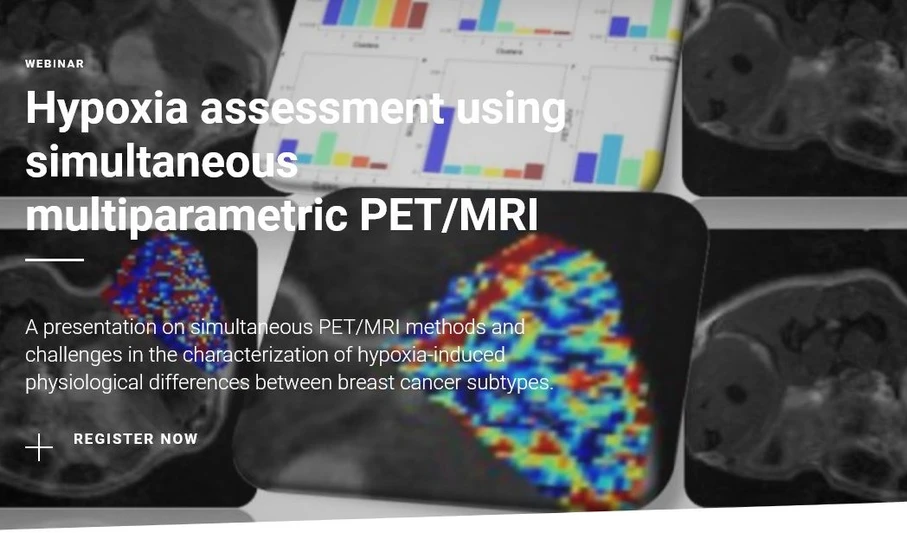
Hypoxia occurs due to inadequate oxygen supply and greatly influences solid tumor development and resistance to treatment.
The tumor microenvironment can influence how aggressive a tumor is and correlate with underlying treatment resistance. Microenvironment biomarkers like tumor pH, hypoxia, and angiogenesis have been correlated with cancer aggression and patient outcomes. PET can play a critical role in the diagnosis, treatment orientation, and subsequent management of tumors as it can provide complementary information regarding tumor metabolic properties, particularly when performed simultaneously with advanced MRI techniques.
Breast cancer is widely known for its high degree of intratumoral heterogeneity, induced by varying selective pressures from the hypoxic tumor microenvironment. In-depth characterization of hypoxia-induced physiological differences between breast cancer subtypes by simultaneous multiparametric PET/MRI would greatly benefit diagnosis and treatment planning in the clinic.
The purpose of this webinar is to discuss challenges in the establishment of MRI protocols, combining, e.g., a) dynamic contrast-enhanced (DCE) and intravoxel incoherent motion (IVIM) MRI for the assessment of intratumoral vascularization, b) hyperoxic blood oxygen level-dependent (BOLD) MRI for the quantification of oxygen delivery, and c) [18F]FMISO PET, highlighting hypoxic tumor subregions.
Finally, we will demonstrate how a combined analysis of simultaneous multiparametric PET/MRI-derived imaging parameters enables the identification of spatially defined and physiologically distinct intratumoral niches within the hypoxic tumor microenvironment. This characterization provides an existing novel perspective on breast cancer and opens up new targets for BC therapy.
What To Expect
- In the context of a preclinical breast cancer model, a discussion on PET/MRI procedures and challenges to establish protocols that combine DCE and intravoxel incoherent motion for the assessment of intratumoral vascularization, hyperoxic BOLD for the quantification of oxygen delivery and [18F]FMISO PET.
Key Learning Topics
Simultaneous PET/MRI characterization of hypoxic breast cancer tumor microenvironment
Intratumoral vascularization
DCE & BOLD MRI & [18F]FMISO PET
Who should attend?
- This webinar will be of interest to multiple profiles in the community of biomedical research especially those applying medical imaging techniques in their work. Clinicians, researchers, PhD students, and postdocs as well as laboratory technicians will find this webinar relevant.
Presenter: Silvester J. Bartsch (Department of Biomedical Imaging and Image-guided Therapy, Medical University of Vienna, Vienna, Austria)
Silvester J. Bartsch studied evolutionary biology at the Department of Theoretical Biology, University of Vienna, before he started his PhD-research project at the Department of Biomedical Imaging and Image-guided Therapy and the Medical University of Vienna. His current research aims at the characterization of niches within the hypoxic tumor microenvironment of breast cancer using simultaneous multiparametric PET/MR imaging. To this end, he combines [18F]FDG and [18F]FMISO PET with multiparametric MRI (diffusion-weighted MRI, blood oxygen level dependent MRI, glucose-enhanced CEST-MRI, dynamic contrast enhanced MRI) for the characterization the hypoxia-induced reprogramming of glucose metabolism, as well as the induction of angiogenesis, which are important hallmarks in breast cancer progression.


