


Excellent Science in Favour of Modern Society
BIOCEV is a joint project of six institutes of the Academy of Sciences of the Czech Republic (Institute of Molecular Genetics, Institute of Biotechnology, Institute of Microbiology, Institute of Physiology, Institute of Experimental Medicine, and Institute of Macromolecular Chemistry) and two faculties of Charles University in Prague (Faculty of Science and 1st Faculty of Medicine). The project’s goal is to establish European Centre of Excellence in biomedicine and biotechnology.
In January 2016, the Institute of Biotechnology CAS (IBT) moved to a BIOCEV centre and is involved in two of the five research programmes. IBT wants to take full advantage of this chance to produce cutting-edge scientific results that will be transferred into clinical practice.
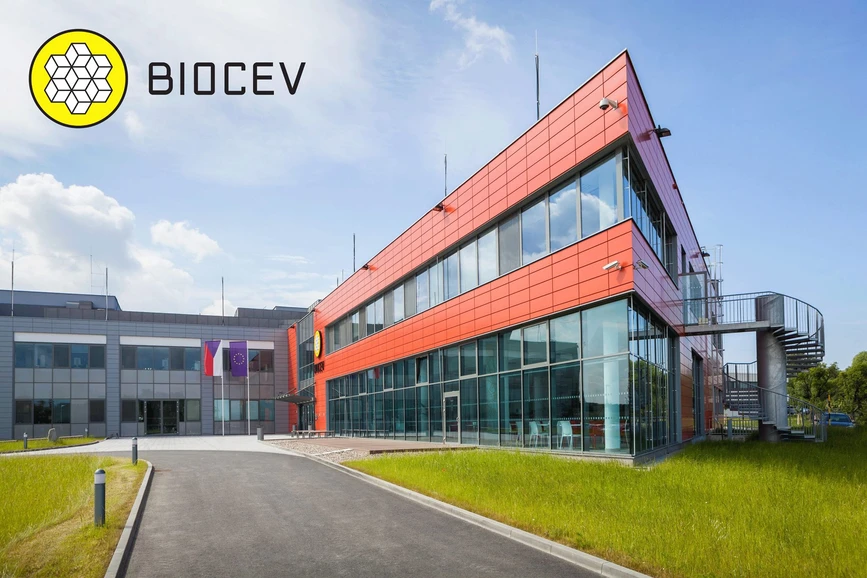 BIOCEV: Biotechnology and Biomedicine Centre of the Academy of Sciences and Charles University in Vestec
Pillars
BIOCEV builds upon three pillars of the knowledge triangle: teaching and education, research and development, and transfer of research results into practice.
The uniqness of the project lies in well-balanced activities and goals set within the three pillars of the knowledge triangle, in BIOCEV supported by modern infrastructure and novel approaches to conducting research, which are based on the experience of top-quality world research institutes.
Research and development
Aim: detailed study of cellular mechanisms at the molecular level, research and development of novel therapeutic strategies, early diagnostics, biologically active agents including chemotherapeutics, protein engineering and other technologies with impact on the quality of life, development of knowledge economy and competitive capacity of the Czech Republic.
Five programme areas: Functional Genomics, Cell Biology and Virology, Structural Biology and Protein Engineering, Biomaterials and Tissue Culture Engineering, and Development of Therapeutic and Diagnostic Strategies
Unique top-quality technology in central laboratories
Teaching and education
- Education namely of PhD students
- Development of new study programmes
- Specialized international courses for Czech and international students and young scientists
- Training of business employees in advanced biotechnology methods
- Popularization and promotion of the fields of biomedicine and biotechnology in the media
Transfer of research results into practice
- Intensive collaboration with the commercial sphere
- Impact on preservation of intellectual property and its further exploitation
Project by numbers
- 5 Research programmes
- 519 Researchers, students and technical stuff
- 25000 Area of the modern laboratories (m²)
- 2,3 (CZK BILION) total project budget
- 36 Patents, prototypes, and applications
- 841 Publications (3/2020)
- 250 MSc. + PhD. students (2019)
- 56 Research Teams
- 6 State-of-the-art Core Facilities
- 5,5 (ha) Site Area
- 7 Project partners
- 2016 The ceremonial opening of the BIOCEV centre
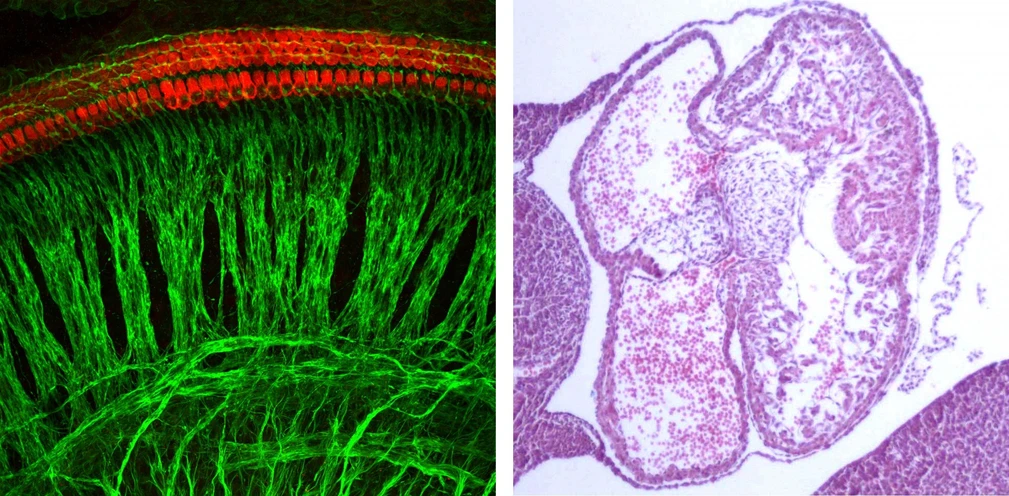 BIOCEV: intro - cochlea and heart.
Project schedule
The idea to establish the new research centre BIOCEV arose in early 2006. At that time the Czech Republic was missing a modern research centre specialized in two prospective domains – biotechnology and biomedicine. As a solution to this situation, the Project BIOCEV came into existence with the planned financial support from the European Structural Funds, namely the Operational programme Research and Development for Innovations.
Research
- Functional Genomics
- Cellular Biology and Virology
- Structural Biology and Protein Engineering
- Biomaterials and Tissue Engineering
- Development of Diagnostic and Therapeutic Procedures
Services
Wrote about us


The mystery of de novo proteins revealed by Czech and German researchers


Cryo-EM structures show how Trypanosomes escape the human innate immune response
Related content
Bauxite analysis with Niton XRF analyzers
Quantifying Contamination in Mass Spectrometers Using SEM-EDX
Waters Aura Systems


