Cheap, Trendy – and Toxic? High Levels of Cadmium in Necklaces Have Been Reported Lately
- Photo: Thermo Fisher Scientific: Cheap, Trendy – and Toxic? High Levels of Cadmium in Necklaces Have Been Reported Lately
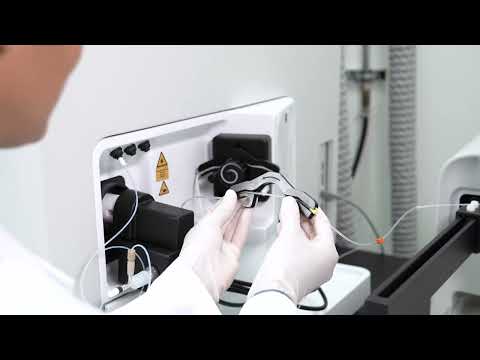
- Video: Sci Spec Co., Ltd.: iCAP™ RQplus ICP MS
Valentines Day is an opportunity to show your partner (or your crush) how much they matter to you. Beyond flowers, chocolates or restaurant invites, jewelry is a popular gift for Valentines day. However, a well meant gift may turn out to even be a hazard to the giftee.
 Thermo Fisher Scientific: Cheap, Trendy – and Toxic? High Levels of Cadmium in Necklaces Have Been Reported Lately
Heavy metals in jewelry, harmful chemicals in baby products: the product range offered by online marketplaces frequently fails to meet European Union safety standards. That is the alarming conclusion of recent investigations by Stiftung Warentest, Germany’s leading consumer protection organization.
A reputation under scrutiny
Low prices, fast fashion, and endless product choices have made online platforms hugely popular across Europe. With just a few clicks, shoppers can order clothes, accessories, toys, and electronics at prices that seem almost too good to be true.
In a large-scale product test, consumer advocates found serious safety deficiencies in many popular items sold on these platforms.
The advice to consumers is equally clear: buyers should dispose of affected products immediately and think carefully about what they order in the future.
Shockingly high levels of toxic metals
One of the most concerning findings involved fashion jewelry. In the test, the cadmium concentration in two necklaces exceeded the EU’s legal limit by 8,500 times. It´s a cheaper alternative to safer metals like silver, zinc alloys, or stainless steel, is easy to work with, and looks good at first glance.
However, cadmium is classified as carcinogenic and can cause serious kidney and bone damage. Because of its toxicity, it is subject to strict limits in the EU. Products that exceed these limits are considered unsafe and illegal to sell.
Experts strongly warn against simply throwing such items into the household trash. Jewelry contaminated with cadmium or other heavy metals should be taken to a hazardous waste collection point.
The investigation covered 162 products in total of which 54 were necklaces.
The products were purchased online and tested in cooperation with consumer organizations from Denmark and Belgium.
The results were sobering:
- 110 of the 162 products failed to meet EU safety standards
- Around 25% were rated “potentially dangerous”
A broader EU problem
EU authorities regularly find toxic heavy metals such as cadmium, lead, and nickel in cheap imported jewelry. These substances can trigger severe allergies, damage organs like the liver and kidneys, and increase cancer risk.
Although the EU’s rapid alert system (RAPEX) removes thousands of unsafe products from the market every year, experts warn that the number of untested items is far higher than what authorities can realistically monitor.
In some laboratory tests, individual jewelry items were found to consist of up to 70% cadmium, making them legally “not marketable” in Germany and the EU.
The takeaway for shoppers should be clear:
- Extremely low prices can come with hidden health and safety risks
- Jewelry, children’s products, and electronics deserve extra caution
- When in doubt, it’s safer to buy from sellers that clearly comply with EU regulations
How can we detect Cadmium in necklaces?
Consumer product/jewelry guidance explicitly notes that cadmium in jewelry extracts can be measured by ICP-OES or ICP-MS after an extraction step.
Cadmium in jewelry is often regulated at low levels (either as total content after digestion or as extractable/migratable Cd in simulated-use leaches). ICP-MS is routinely chosen because it can quantify Cd at trace / ultra-trace levels with strong precision and accuracy.
Using a Thermo Scientific iCAP MX Series ICP-MS for Cadmium (Cd) determination in necklaces/ jewellery makes sense because jewelry testing typically needs very low detection limits, high confidence in complex matrices, and defensible compliance data.
- Better interference control for Cd isotopes
Cadmium has a range of isotopes available for analysis, but interferences need to be considered. Most isotopes are isobarically interfered by Tin (meaning that a given m/z range would be responding to both elements), the isotope typically monitored (111Cd) may be interfered by molybdenum (95Mo16O+). Since both elements can be found as well in jewelry, removing these interferences is critical to avoid false positives. The iCAP MX Series ICP-MS come with the powerful QCell collision/reaction cell to overcome interferences. The Thermo Scientific iCAP MSX ICP-MS uses kinetic energy discrimination (KED) with helium gas, a generic way for reducing polyatomic interferences broadly across the mass range. The Thermo Scientific iCAP MTX ICP-MS can utilize reactive gases (in many applications O2) to further improve detectability and sensitivity – a powerful asset for laboratories analysing a wide range of sample types, which on top may “messy” – i.e. containing platings, alloys, pigments, fillers, and adhesives.
- Works with recognized jewelry test workflows
Because necklaces and other consumer products often arrive as multiple distinct batches, repeats, blanks, spikes, and QC checks must be performed. All iCAP MX Series ICP-MS systems are positioned for high-throughput routine trace elemental analysis, helping labs to simplify workflows and keeping uptime high—useful in contract/compliance labs.
Conclusion
The findings underscore a troubling reality: many ultra-cheap products sold via online marketplaces pose real health and safety risks and routinely fail to meet EU standards. From toxic heavy metals in jewelry to hazardous chemicals in baby products, the consequences for consumers can be severe. Addressing this challenge requires both stronger regulatory oversight and reliable analytical testing. Advanced techniques such as ICP-MS play a critical role by enabling laboratories to accurately detect trace contaminants like cadmium across complex samples, helping authorities and manufacturers ensure compliance. Until safeguards improve, consumers are urged to remain vigilant—because when safety is compromised, a low price is no bargain at all.
Additional resources
- Quadrupole ICP-MS Systems
- Ignite your confidence: iCAP MTX triple quadrupole ICP-MS
- Qtegra ISDS software
Join us for free local language webinars in 2026
English
- Lunch and Learn Tips and Tricks Series: Qtegra Part 1
- Lunch and Learn Tips and Tricks Series: Qtegra Part 2
- Lunch and Learn Tips and Tricks Series: Trace Elemental Analysis (ICP-OES & ICP-MS)
- Trace Elemental Analysis: Ask the Expert
Deutsch
- 19. März 2026
Interne Standards in der ICP-OES: Ein Praxisguide für zuverlässige Qualitätssicherung im Labor - 18. Juni 2026
Fehler reduzieren, Durchsatz steigern: Autoverdünnung mit PrepFast am ICP-MS - 17. September 2026
ICP-OES smarter nutzen: Probendurchsatz erhöhen, Ressourcen sparen - 17. Dezember 2026
Qtegra ISDS Software Unlocked – Live im Expertengespräch
Visit us on LinkedIn: #ICP-MS #ElementalAnalysis #cadmium #TraceElementalAnalysis
Petra Gerhards
Petra Gerhards, Dipl-Ing, is Regional Marketing Manager of GC and GC-MS for EMEA at Thermo Fisher Scientific. She has more than 29 years of experience in the fields of GC-MS, SPE and LC-MS. Since joining the regional team she has contributed to workflow solutions combining vials and closures with SPE solutions, GC-MS and LC-MS. She works with KOL's on data for regional specific marketing campaigns, organizes in-house seminars and works on customer specific solutions. Her main expertise is in the field of doping and drugs-of-abuse analysis.